
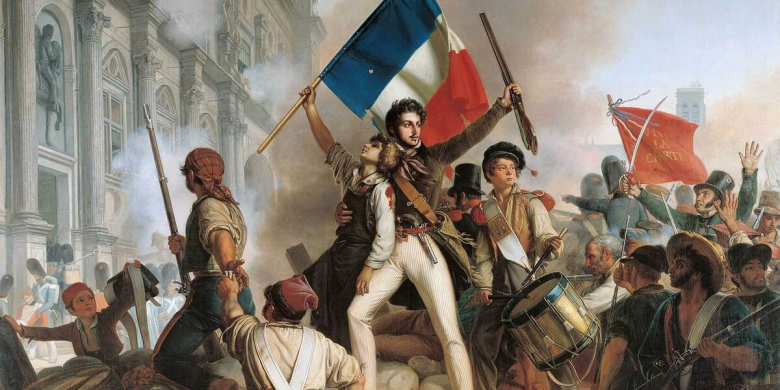
Introduction
The French Revolution, spanning from 1789 to 1799, stands as one of the most pivotal events in human history, fundamentally reshaping the political, social, and cultural landscape not only of France but also of the entire world. Emerging from a complex web of economic turmoil, social inequality, and intellectual ferment, the revolution was propelled by the fervent desire for liberty, equality, and fraternity. At its core, the revolution represented a seismic rupture with the past, challenging entrenched systems of privilege and authority that had long defined French society. The revolutionaries’ rejection of absolute monarchy and their embrace of revolutionary ideals sparked a cascade of events that would ultimately lead to the dismantling of the ancien régime and the birth of a new era of republican governance. However, the French Revolution was not merely a domestic affair; its reverberations were felt far beyond the borders of France. From the spread of revolutionary ideas across Europe to the rise of Napoleon Bonaparte and the subsequent Napoleonic Wars, the revolution’s impact on global politics was profound and far-reaching.
The French Revolution (1789–1799) stands as one of the most transformative events in modern world history. Emerging from deep social inequality, financial crisis, and political discontent in France, the Revolution fundamentally altered the structure of French society and governance. It dismantled centuries-old feudal privileges, weakened monarchical authority, and introduced radical political ideas centered on liberty, equality, and fraternity. While the Revolution began as a domestic upheaval against the Bourbon monarchy, its influence extended far beyond France’s borders, shaping political ideologies, national movements, economic systems, and social reforms across continents.
The Revolution not only ended absolute monarchy in France but also challenged the legitimacy of hereditary rule and divine-right monarchy throughout Europe. Its Declaration of the Rights of Man and of the Citizen became a foundational document for modern democratic governance and human rights discourse. In the centuries that followed, the ideas born during the Revolution inspired independence movements in Latin America, constitutional reforms in Europe, anti-colonial struggles in Asia and Africa, and the evolution of modern citizenship.
OBJECTIVE OF THE STUDY: This paper is seeks to study the Causes, Events, and Impact of The French Revolution on Global Politics. RESEARCH METHODOLOGY: This study is based on secondary sources of data such as articles, books, journals, research papers, websites and other sources. THE FRENCH REVOLUTION: CAUSES, EVENTS, AND IMPACT ON GLOBAL POLITICS” The French Revolution, which began in 1789 and lasted until the late 1790s, was a watershed moment in global history. Its causes were multifaceted, its events tumultuous, and its impact on global politics profound.
CAUSES OF THE FRENCH REVOLUTION:
The French Revolution of 1789 was a seismic event in European history, reshaping the political, social, and cultural landscape of France and beyond. Its causes are deeply rooted in a combination of longstanding structural issues, socio-economic disparities, intellectual ferment, and political crises that converged to ignite one of the most significant revolutions in modern history. 1. Socio-Economic Inequality: At the heart of the French Revolution lay profound socio-economic disparities. French society was divided into three estates: the clergy, the nobility, and the commoners (Third Estate). The clergy and nobility, comprising only a small fraction of the population, enjoyed significant privileges, including exemption from most taxes. In contrast, the burden of taxation fell disproportionately on the Third Estate, which encompassed the vast majority of the population, including peasants, urban workers, and the bourgeoisie. Feudal obligations, such as corvée (forced labor), tithes, and seigneurial dues, weighed heavily on the peasantry, hindering economic mobility and exacerbating discontent. Meanwhile, the bourgeoisie, composed of wealthy merchants, professionals, and intellectuals, resented their exclusion from political power and sought greater influence commensurate with their economic status.
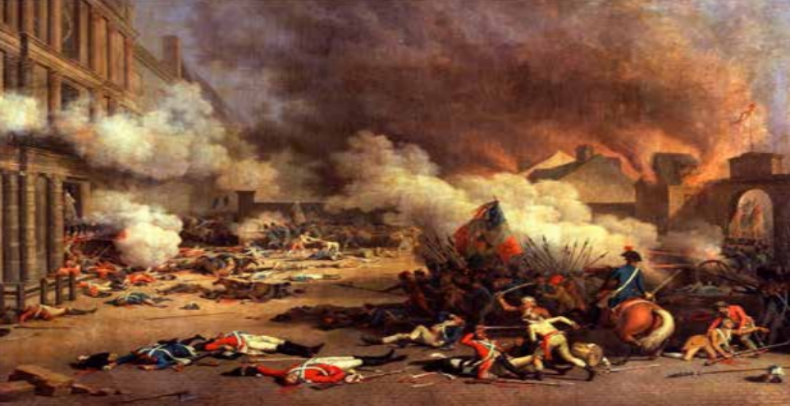
Economic Instability: France faced chronic fiscal crises exacerbated by extravagant spending, including funding expensive wars, such as the Seven Years’ War and the American Revolutionary War. Attempts to reform the tax system, such as the unsuccessful efforts by finance ministers like Jacques Necker, were met with resistance from vested interests, further aggravating economic woes. The state’s financial predicament was compounded by a regressive taxation system that burdened the peasantry and urban poor while exempting the nobility and clergy. This fiscal imbalance contributed to growing resentment toward the monarchy and fueled demands for fiscal reform and political representation. 3. Enlightenment Ideals: The Enlightenment, an intellectual movement that swept across Europe in the 18th century, profoundly influenced revolutionary thought in France. Enlightenment thinkers such as Voltaire, Montesquieu, Rousseau, and Diderot championed principles of reason, liberty, equality, and fraternity, challenging traditional sources of authority, including the monarchy and the Catholic Church. Enlightenment ideas permeated French society, inspiring calls for political reform, religious tolerance, and social justice. The spread of radical literature, pamphlets, and newspapers disseminated these ideas to a broader audience, fueling discontent and questioning the legitimacy of the ancien régime. 4. Political Dysfunction: The Bourbon monarchy, under Louis XVI, grappled with political inertia and administrative inefficiency. The absolutist system of governance, characterized by royal absolutism and centralization of power, was ill-equipped to address the challenges facing France in the late 18th century. The Estates-General, an assembly representing the three estates, had not been convened since 1614. When Louis XVI reluctantly called for its convocation in 1789 to address the fiscal crisis, it sparked demands for political reform and constitutional change. The Third Estate, frustrated by the unequal representation and procedural obstacles, declared itself the National Assembly, signaling a direct challenge to royal authority. 5. Social Unrest and Preceding Events: The years leading up to the revolution were marked by social unrest, food shortages, and bread riots, reflecting widespread dissatisfaction with the status quo. Events such as the Flour War of 1775 and the Diamond Necklace Affair of 1785 underscored simmering tensions and exposed the vulnerabilities of the monarchy. The American Revolutionary War, which saw France provide crucial support to the American colonies in their struggle against British rule, exacerbated France’s financial woes and fueled revolutionary fervor. The military defeats and financial strain incurred during the war further undermined the monarchy’s credibility and emboldened calls for reform.The French Revolution, a seismic event in world history, unfolded over the course of a decade, reshaping the political, social, and cultural landscape of France and reverberating across the globe. From the convocation of the Estates-General to the rise of Napoleon Bonaparte, the revolution was marked by a series of pivotal events that fundamentally altered the course of history. 1. Convocation of the Estates-General (May 1789): The immediate trigger for the French Revolution was the fiscal crisis plaguing France. King Louis XVI, facing mounting debts and popular discontent, convened the Estates-General, an assembly representing the three estates of French society—the clergy, the nobility, and the commoners. However, the archaic structure of the Estates-General, which granted each estate a single vote, favored the privileged orders and stymied meaningful reform. 2. Formation of the National Assembly (June 1789): Frustrated by their lack of influence within the Estates-General, the Third Estate—representing the commoners—seized the initiative and declared itself the National Assembly, asserting its authority to enact laws on behalf of the nation. This bold move signaled a direct challenge to the absolutist rule of the monarchy and set the stage for further confrontation. 3. Storming of the Bastille (July 1789): Tensions between the monarchy and the people reached a boiling point on July 14, 1789, when Parisian revolutionaries stormed the Bastille, a fortress symbolizing royal tyranny and oppression. The fall of the Bastille, though it held only a handful of prisoners, served as a potent symbol of popular resistance and marked the beginning of the French Revolution. 4. The Great Fear (July-August 1789): The storming of the Bastille unleashed a wave of popular uprisings and rural unrest across France, known as the Great Fear. Peasants, emboldened by the events in Paris, revolted against their feudal overlords, attacking manor houses and demanding the abolition of feudal privileges. The Great Fear underscored the depth of social discontent and laid bare the vulnerabilities of the ancien régime. 5. Abolition of Feudalism and Declaration of the Rights of Man (August 1789): In response to mounting pressure from below, the National Assembly embarked on a series of sweeping reforms aimed at dismantling the ancien régime. In August 1789, it abolished feudal privileges, extinguishing the remnants of feudalism that had long burdened the peasantry. Moreover, the National Assembly adopted the Declaration of the Rights of Man and of the Citizen, enshrining principles of liberty, equality, and fraternity as the foundation of the new order.6. Women’s March on Versailles (October 1789): Faced with food shortages and economic hardship, thousands of women from Paris marched to Versailles on October 5, 1789, demanding bread and justice. Their protest, fueled by grievances against the monarchy and the nobility, culminated in the forcible relocation of the royal family to Paris, where they would remain under the watchful eye of the revolutionaries. 7. Radicalization and the Reign of Terror (1793-1794): The revolution took a radical turn with the onset of the Reign of Terror, a period of mass executions and political purges orchestrated by the radical Jacobin regime led by Maximilien Robespierre. Targeting perceived enemies of the revolution, including aristocrats, clergy, and counter-revolutionaries, the Reign of Terror unleashed a wave of violence that claimed thousands of lives and engulfed France in fear and uncertainty. 8. Rise of Napoleon Bonaparte (1799): Amid the chaos and instability of the revolution, a young military officer named Napoleon Bonaparte emerged as a charismatic leader capable of restoring order and consolidating power. In a coup d’état on November 9, 1799 (18 Brumaire in the French Republican calendar), Napoleon seized control of the government, effectively ending the revolutionary era and laying the groundwork for his eventual ascension to emperor. 9. Napoleonic Wars and the Napoleonic Code (1804): Napoleon’s rise to power inaugurated a new phase in French history characterized by imperial expansion and military conquest. Over the next decade, France would engage in a series of wars with its European neighbors, seeking to spread revolutionary ideals and extend its influence across the continent. Additionally, Napoleon implemented sweeping legal reforms, including the codification of French law in the Napoleonic Code, which would have a lasting impact on legal systems around the world. IMPACT OF THE FRENCH REVOLUTION ON GLOBAL POLITICS (1789-1815) The French Revolution, with its ideals of liberty, equality, and fraternity, had a profound and farreaching impact on global politics during the late 18th and early 19th centuries. Beyond the borders of France, the revolutionary fervor sparked by events such as the storming of the Bastille and the Declaration of the Rights of Man reverberated across Europe and beyond, shaping the course of international relations, inspiring nationalist movements, and fueling decades of conflict. 1. Spread of Revolutionary Ideals: The French Revolution served as a beacon of hope for oppressed peoples around the world, inspiring movements for freedom, equality, and self-determination. The principles enshrined in documents like the Declaration of the Rights of Man resonated with Enlightenment ideals and fueled demands for political reformand emancipation in Europe, the Americas, and beyond. From the American colonies to the Caribbean slave plantations, revolutionary fervor ignited the aspirations of those yearning for liberty and human rights. 2. Impact on Europe: “ The French Revolution unleashed a wave of revolutionary upheaval across Europe, as monarchies and aristocracies faced mounting pressure from below. In countries such as Austria, Prussia, and Italy, the spread of revolutionary ideas fueled discontent among the peasantry and urban workers, leading to outbreaks of violence and calls for political reform. The French Revolutionary Wars, which pitted revolutionary France against a coalition of European powers, further destabilized the continent and contributed to the downfall of traditional monarchies. 3. Rise of Napoleon Bonaparte: The French Revolution paved the way for the rise of Napoleon Bonaparte, a military genius and political opportunist who capitalized on the chaos and instability of the revolutionary era to seize power. As First Consul and later Emperor of the French, Napoleon embarked on a campaign of imperial expansion, seeking to spread revolutionary ideals and extend French influence across Europe. The Napoleonic Wars, which spanned nearly two decades and engulfed the continent in conflict, reshaped the balance of power and left a lasting imprint on the map of Europe. 4. Napoleonic Code and Legal Reforms: Napoleon’s rule brought about significant legal reforms, most notably the codification of French law in the Napoleonic Code. Drawing upon Enlightenment principles and revolutionary ideals, the Napoleonic Code sought to create a uniform system of law that emphasized equality before the law, property rights, and civil liberties. The Napoleonic Code served as a model for legal reform in many countries and had a lasting impact on legal systems around the world. 5. Nationalism and Identity: The French Revolution fueled the rise of nationalism as people began to identify more strongly with their nation-state rather than traditional loyalties to monarchs or empires. The concept of popular sovereignty, embodied in revolutionary slogans like “liberté, égalité, fraternité,” galvanized individuals and communities to assert their rights and aspirations as members of a national community. Nationalist movements emerged across Europe, challenging the legitimacy of multinational empires and laying the groundwork for the redrawing of political boundaries. 6. Congress of Vienna and the Restoration: The end of the Napoleonic Wars in 1815 saw the convening of the Congress of Vienna, where European powers sought to restore stability and order to the continent in the wake of the revolutionary upheaval. Led by statesmen such as Metternich of Austria and Castlereagh of Britain, the Congress of Vienna aimed to roll back the revolutionary gains of the French Revolution and restore the pre-revolutionary statusquo. Through a series of treaties and diplomatic agreements, the Congress of Vienna established a new balance of power in Europe and paved the way for the restoration of monarchies and aristocracies. 7. Legacy of Revolution: Despite the eventual defeat of Napoleon and the restoration of conservative regimes in Europe, the French Revolution left a lasting legacy that would shape the course of modern history. The ideals of liberty, equality, and fraternity, though often betrayed or distorted, continued to inspire movements for social justice, political reform, and human rights in the centuries that followed. From the struggle against colonialism in the 19th and 20th centuries to the quest for civil rights and democracy in the present day, the legacy of the French Revolution endures as a testament to the enduring power of revolutionary ideals.
France on the Eve of the Revolution
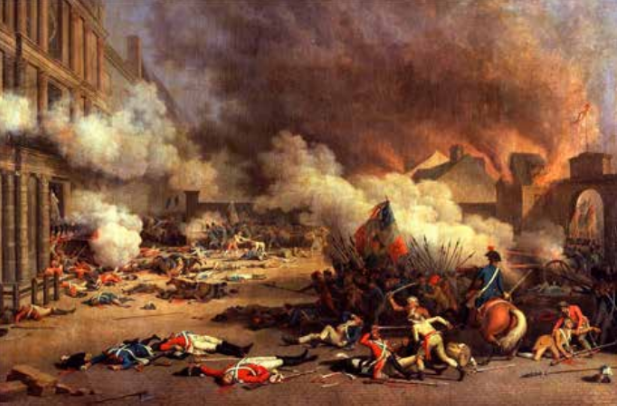
France was marked by deep-rooted social inequalities among the three estates, economic hardships, and political unrest, laying the groundwork for the transformative events that unfolded during the French Revolution.
French society: Eighteenth-century French society was divided into three estates.
First Estate: The clergy, which included bishops, priests, and other religious officials, enjoyed significant privileges and were exempt from taxation.
Second Estate: The nobility, comprising the aristocrats and members of the royal family, held vast lands and feudal rights over the peasantry. They too were exempted from paying taxes.
Third Estate: This estate encompassed the vast majority of the population, including the bourgeoisie (merchants and professionals), urban workers, and peasants. They bore the brunt of the tax burden imposed by the monarchy, fueling resentment towards the privileged classes.
This rigid social stratification, known as the “Old Regime,” perpetuated inequalities and contributed to the mounting discontent that ultimately sparked the French Revolution.
French polity: France was an absolute monarchy, with King Louis XVI holding supreme power. The monarchy was considered divinely ordained, and the king ruled through a vast bureaucracy.
French economy: The French economy was primarily agricultural, with a significant portion of the population engaged in farming…. Read more at: https://vajiramandravi.com/upsc-exam/french-revolution/

French Revolution Causes
Several factors contributed to the causes of the French Revolution:
Economic inequality: Most rural peasants lived in extreme poverty, struggling to make ends meet while shouldering heavy tax burdens. The clergy and nobility, meanwhile, were exempt from taxes and granted privileges.
Financial crisis: Years of extravagant spending by the monarchy, particularly King Louis XVI and the royal court, drained the state coffers and left the government heavily indebted.
Social injustice: The Third Estate, which comprised the majority of the population, faced inequality in terms of representation and political power.
They were burdened with heavy taxes and lacked social mobility, while the nobility and clergy enjoyed numerous privileges and monopolies.
Urban poor’s resentment: The urban poor, facing unemployment, rising prices, and inadequate social welfare, grew increasingly resentful of the ruling regime and in resentment, they resorted to riots.
Enlightenment ideas: Enlightenment philosophies, which emphasised individual liberty, reason, and equality, had a significant influence on the intellectual climate in France. Thinkers such as Voltaire, Rousseau, and Montesquieu promoted ideas of individual liberty, reason, and equality, inspiring a new wave of progressive thought.
Voltaire criticised religious intolerance and championed freedom of speech and reason.
Rousseau expanded upon these ideas by proposing a form of government based on a social contract between people and their representatives.
Montesquieu in “The Spirit of the Laws,” advocated for a division within the government into legislative, executive, and judicial branches as well as separation of power among them.
This model of government was put into practice in the United States following the colonies’ declaration of independence from Britain.
The French intellectuals found great inspiration in the American Constitution and its protection of individual rights.
Influence of the American Revolution: The success of the American Revolution against British rule demonstrated that a determined population could overthrow a monarchy and establish a democratic government.
French leaders like Lafayate participated in the American Revolution, and they became the forebears of the revolution in France on their return.
Weak leadership: The monarchy under Louis XVI faced challenges due to weak leadership, a lack of decisive action, and a growing disconnect with the needs and aspirations of the population.
Queen Marie Antoinette: Her extravagant lifestyle and perceived indifference to the struggles of the French people aggravated public resentment. She was originally from Austria, which made her a foreign queen in the eyes of the French people. This fueled negative sentiments towards her and the monarchy…. Read more at: https://vajiramandravi.com/upsc-exam/french-revolution/
I. Development Divide
One of the core causes of the French Revolution was the deep development divide within French society. Pre-revolutionary France was divided into three estates: the First Estate (clergy), the Second Estate (nobility), and the Third Estate (common people). While the clergy and nobility enjoyed privileges such as tax exemptions and political influence, the Third Estate—comprising peasants, urban workers, and the rising bourgeoisie—bore the burden of taxation and had little political representation.
Economically, France faced severe inequality. The rural population suffered from high taxes, feudal dues, and poor harvests. Meanwhile, aristocrats maintained lavish lifestyles at Versailles. Industrial and commercial growth had empowered the bourgeoisie, yet political power remained monopolized by the monarchy and nobility. This mismatch between economic contribution and political representation created frustration among the middle class.
Globally, similar development divides existed in other societies. Colonial territories were exploited for resources while local populations were denied political rights. The Revolution’s critique of privilege resonated internationally, highlighting structural inequalities and prompting demands for reform.
The Revolution sought to eliminate internal divides by abolishing feudal privileges in 1789 and declaring equality before the law. However, while legal equality was proclaimed, economic inequality persisted. The revolutionary government redistributed church lands and attempted reforms, but social divisions did not vanish overnight. This demonstrates that political transformation does not automatically eliminate economic disparities—an important lesson for development theory.
II. Opportunities and Challenges
The French Revolution created unprecedented opportunities for political participation and social mobility. By dismantling feudal structures, it allowed talented individuals to rise based on merit rather than birth. Napoleon Bonaparte’s rise exemplifies this new meritocratic order. Educational reforms and administrative restructuring under Napoleon modernized France’s bureaucracy and legal system.
Internationally, revolutionary ideals encouraged movements for self-determination. In Latin America, leaders such as Simón Bolívar were inspired by the principles of liberty and republicanism. The Haitian Revolution (1791–1804), directly influenced by French revolutionary ideals, led to the first successful slave revolt and the establishment of an independent Black republic.
However, the Revolution also posed serious challenges. Political instability led to violence, most notably during the Reign of Terror (1793–1794), when thousands were executed. Radicalization, factionalism, and power struggles destabilized France. Economic turmoil, inflation, and war further complicated governance.
Globally, the spread of revolutionary ideas triggered wars across Europe. Monarchies feared similar uprisings and formed coalitions against France. The Napoleonic Wars reshaped Europe’s political map but also caused widespread destruction.
Thus, while the Revolution expanded political possibilities, it also revealed the risks of rapid, unstructured change. Transformative reforms require institutional stability to prevent chaos.
III. Strategies for Balanced Development
The experience of the French Revolution highlights the need for balanced development—where political reform is accompanied by economic stability and social inclusion. Revolutionary France focused heavily on political transformation but struggled to maintain economic order.
A balanced strategy would include:
Gradual Institutional Reform: Sudden abolition of long-standing institutions can create administrative gaps. Sustainable reform requires transition planning.
Inclusive Political Representation: The Revolution broadened representation, but early voting rights were limited to property-owning men. True balance requires wider civic participation.
Economic Stabilization Measures: Inflation and food shortages fueled unrest. Policies ensuring food security and fair taxation are crucial for social peace.
Legal Codification: Napoleon’s Civil Code (1804) was a successful strategy in institutionalizing revolutionary principles while ensuring order. It established equality before the law and influenced legal systems worldwide.
Balanced development means synchronizing political freedom with economic justice and social cohesion.
IV. Policy Frameworks and Historical Context
The French Revolution emerged from Enlightenment thought. Philosophers such as John Locke, Jean-Jacques Rousseau, and Montesquieu advocated natural rights, social contracts, and separation of powers. These intellectual frameworks shaped revolutionary policies.
The Declaration of the Rights of Man and of the Citizen (1789) articulated universal rights: liberty, property, security, and resistance to oppression. This document became a model for future constitutions and international human rights instruments.
Historically, France’s financial crisis—caused by costly wars (including support for the American Revolution) and inefficient taxation—triggered the Estates-General meeting in 1789. The failure to reform taxation exposed the rigidity of the old regime.
Globally, revolutionary policy frameworks influenced:
The 1804 Haitian Constitution abolishing slavery.
Latin American independence constitutions.
European constitutional monarchies in the 19th century.
The Universal Declaration of Human Rights (1948).
Thus, the Revolution provided both ideological and institutional templates for modern governance.
V. Case Studies in Integrated Development
1. Haiti:
The Haitian Revolution applied French revolutionary principles to challenge slavery. While independence was achieved, international isolation and economic sanctions hindered development. This case shows that political freedom without economic integration can limit progress.
2. Latin America:
Countries like Venezuela and Argentina adopted republican models inspired by France. However, political instability and inequality persisted. The adoption of revolutionary ideals did not automatically ensure social equity.
3. Europe after Napoleon:
The Napoleonic Code spread across Europe, modernizing legal systems in Italy, Germany, and Spain. This legal integration facilitated economic development by standardizing property rights and contracts.
4. India’s Freedom Movement:
Though separated by time, Indian leaders were influenced by revolutionary ideas of rights and citizenship. Democratic institutions established after independence reflected principles of equality and sovereignty rooted partly in Enlightenment and revolutionary traditions.
These case studies illustrate that integrated development requires combining political reform with economic planning, social justice, and international cooperation.
VI. Recommendations for Policy Prioritization
Drawing lessons from the French Revolution and its global impact, policymakers should prioritize:
Institutional Strengthening: Sustainable change depends on resilient institutions that can manage transition.
Equitable Taxation Systems: Economic inequality fueled revolutionary anger. Modern states must design fair tax systems to prevent social unrest.
Human Rights Protections: Codifying rights ensures accountability and prevents authoritarian backsliding.
Civic Education: Enlightenment ideas empowered citizens intellectually. Educated populations are essential for democratic stability.
Conflict Management Mechanisms: Revolutionary France descended into violence partly due to weak mediation structures. Modern reforms require dialogue platforms.
Global Solidarity: Haiti’s isolation demonstrates the need for supportive international frameworks to sustain new political systems.
By prioritizing inclusive governance and economic fairness, nations can harness transformative change without replicating the instability of revolutionary France.
Conclusion
The French Revolution, with its tumultuous events and far-reaching consequences, stands as a pivotal chapter in human history, leaving an indelible mark on the trajectory of global politics. From its origins in the economic crisis and social inequality of 18th-century France to its culmination in the rise of Napoleon Bonaparte and the Napoleonic Wars, the revolution reshaped the political, social, and cultural landscape of the world. The revolution’s legacy is profound and multifaceted. It inspired revolutionary movements across Europe and beyond, challenging traditional hierarchies and paving the way for the emergence of modern nation-states. The ideals of liberty, equality, and fraternity that fueled the revolution continue to resonate, serving as guiding principles for movements advocating for democratic rights and social justice. Moreover, the French Revolution spurred significant geopolitical shifts, leading to the redrawing of borders, the collapse of empires, and the rise of new forms of governance. The Napoleonic Wars, fought in the pursuit of French hegemony, transformed the balance of power in Europe and set the stage for the emergence of nationalism and liberalism in the 19th century.
The revolution in France had a profound impact on the lives of all peoples in
Europe. Its effects proved lasting and France and Europe never really returned
to the conditions of the old order. The principles of democracy, liberty,
merit, equality and sovereignty of the people have been an enduring aspect
of the legacy of the French Revolution. The revolution of 1789 opened over
a century of revolutionary upheavals which culminated in the Russian
Revolution and the establishment of Soviet Russia. The very ideas of rights,
citizenship, secular society, free speech, merit, rule of law, popular sovereignty
and democracy in the Western world were fundamentally shaped by the
tumultuous years of the French Revolution. These ideas continue to
shape and drive events in the world today.