
Introduction
The Dawn of the Neural Age in Healthcare
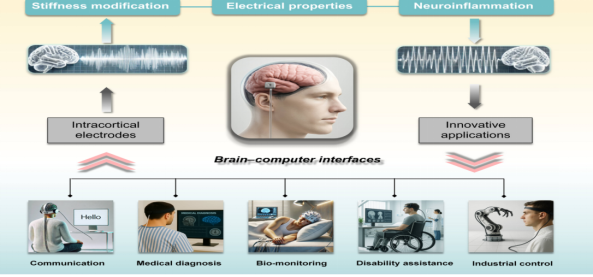
For centuries, the treatment of neurological damage and paralysis was restricted to rehabilitation, assistive technologies, or palliative care. Today, we are standing on the brink of a new era in medicine where the boundary between human thought and digital technology is being erased. High-tech Brain-Computer Interfaces (BCIs) and neural implants are transitioning from science fiction to clinical reality, promising to revolutionize healthcare by establishing a direct, real-time link between the human brain and external devices. By interpreting neural signals, these advanced interfaces allow individuals with severe disabilities to control prosthetic limbs, communicate via computer, or even navigate their environment with nothing but their thoughts.
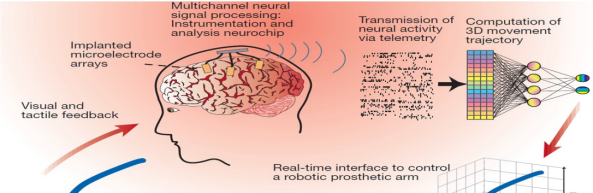
At their core, BCIs work by decoding electrical signals produced by neurons in the brain and converting them into digital commands that computers or machines can understand. Neural implants take this a step further by embedding electrodes or sensors directly into or around the brain or nervous system. These devices can read neural activity with high precision and, in some cases, stimulate neural tissues to restore or modify function — ushering in an era of neurotechnology with transformative implications for medicine and society.
The future of healthcare is being reshaped by several key advancements:
- Restoring Autonomy: BCIs empower patients with severe disabilities, such as ALS or spinal cord injuries, to control prosthetic limbs and communication aids using only their thoughts.
- Predictive Diagnostics: Modern BCI systems leverage AI and machine learning to detect early markers of neurological disorders like epilepsy and Alzheimer’s disease, often with accuracy rates exceeding 85%.
- Advanced Neuromodulation: Closed-loop neural implants provide real-time, targeted electrical stimulation to manage chronic pain, depression, and Parkinson’s disease symptoms more effectively than traditional therapies.
- Technological Miniaturization: Innovations from companies like Neuralink and Synchron are making implants less invasive and more portable, aiming for “high-volume” clinical adoption as early as 2026.
Types of Brain-Computer Interfaces (BCIs)
Invasive BCIs
Invasive BCIs involve the implantation of electrodes directly into the brain tissue to achieve high-resolution neural signal acquisition. These interfaces are primarily used in medical applications, such as restoring motor function in paralyzed individuals or treating neurological disorders. Notable examples include the BrainGate system, which enables individuals with severe motor impairments to control prosthetic limbs through thought alone.
Partially Invasive BCIs
Partially invasive BCIs are implanted inside the skull but remain outside the brain tissue. They provide a balance between signal quality and surgical risks, making them a viable alternative to fully invasive systems. These BCIs are utilized in applications like seizure prediction and neurorehabilitation, where high-fidelity neural data is required without the extensive risks associated with deep-brain implantation.
Non-Invasive BCIs
Non-invasive BCIs operate by detecting brain activity using external electrodes placed on the scalp, typically through electroencephalography (EEG). Although these BCIs have lower signal resolution compared to invasive counterparts, they offer the advantage of safety and ease of use. Applications include brain-controlled wheelchairs, virtual reality (VR) interaction, and cognitive workload monitoring in high-performance settings such as aviation and military operations.
Modern-Day Implications and Applications of BCIs
Healthcare and Neurorehabilitation
One of the most significant applications of BCIs is in the healthcare sector. These interfaces enable individuals with neurological disorders such as amyotrophic lateral sclerosis (ALS), spinal cord injuries, and stroke-induced paralysis to regain lost functionalities. For instance, BCIs facilitate communication for locked-in syndrome patients through thought-driven spelling devices, while neuro-prosthetic limbs controlled by brain signals offer newfound mobility to amputees.
Assistive Technology for Disabled Individuals
BCIs provide life-changing assistive technologies that empower individuals with disabilities. EEG-based BCIs allow users to control wheelchairs, robotic arms, and home automation systems through neural commands, significantly improving their quality of life. The development of eye-tracking and brainwave-controlled typing systems further enhances accessibility for individuals with severe motor impairments.
Human-Computer Interaction and Virtual Reality
The integration of BCIs with human-computer interaction (HCI) technologies has revolutionized gaming, virtual reality (VR), and augmented reality (AR). Companies such as Neuralink and Emotiv are developing brain-controlled interfaces that enable users to navigate digital environments and interact with virtual objects using mere thought, paving the way for a more immersive and intuitive digital experience.
Cognitive Enhancement and Mental Health Monitoring
BCIs are being explored as tools for cognitive enhancement, focusing on improving attention, memory, and problem-solving abilities. Additionally, they hold promise in mental health applications by detecting and analyzing neural patterns associated with stress, anxiety, and depression. Neurofeedback-based therapies are being developed to assist individuals in regulating their emotional states and improving overall mental well-being.
Military and Defense Applications
The defense sector is leveraging BCIs for various military applications, including cognitive load assessment, brain-controlled drones, and enhanced situational awareness for soldiers. Research in brainwave-based lie detection, fatigue monitoring, and brain-stimulation technologies is further expanding the role of BCIs in modern warfare and defense strategies.
I. Development Divide
Technological and Global Landscape
The development of brain-computer interfaces and neural implants represents one of the most technologically complex endeavors of our time, situated at the intersection of neuroscience, computer science, biomedical engineering, and clinical medicine. Yet, despite the shared excitement, there is a notable development divide — both in technology maturity and geographic leadership.
On the technological front, BCIs range from non-invasive systems that use surface sensors (such as electroencephalography, EEG) to infer brain activity, to invasive implants that interface directly with neural tissue for much higher resolution. Non-invasive systems have been useful for research and consumer-grade applications, but their clinical impact remains limited due to signal noise and low fidelity. In contrast, invasive BCIs — especially implantable neural interfaces — are now reaching clinical application, enabling people with severe motor impairments to perform actions once believed impossible without physical movement.
On the global spectrum of development, countries and companies vary widely in approach and investment. In the United States, several startups and research institutions are pioneering neural implants, including high-profile ventures like Neuralink. In China, the government has launched a coordinated policy effort to build a competitive BCI industry with major breakthroughs anticipated by 2027 and broader commercial ecosystems by 2030. The policy even aims to incorporate BCIs beyond healthcare into industry and consumer electronics, highlighting how leadership in neurotech now has national strategic dimensions.
Despite these advances, a development divide persists within nations as well: most cutting-edge research and clinical trials are concentrated in wealthy regions with strong research ecosystems. This raises concerns about equitable access, especially for individuals in lower-resource settings who may benefit most from disability-restoring technologies.
II. Opportunities and Challenges
The potential opportunities offered by brain-computer interfaces and neural implants are profound — and equally matched by complex challenges that span technical, ethical, and societal dimensions.
Opportunities in Healthcare
The most immediate and impactful applications of BCIs and neural implants are in restorative medicine and neurorehabilitation — especially for conditions that have long defied effective treatment:
Motor Function Restoration
BCIs can enable individuals with paralysis or limb loss to control prosthetic arms, robotic devices, or even their own muscles through direct brain signals. For many patients, this offers independence previously unimaginable.
Communication Solutions
For people who are non-verbal due to conditions such as amyotrophic lateral sclerosis (ALS), stroke, or spinal cord injury, BCIs can translate neural intent into text or speech, providing a new mode of expression.
Sensory Restoration
Experimental devices such as Blindsight — developed by Neuralink — aim to restore visual perception by bypassing damaged optic nerves and directly stimulating visual cortex areas. This has been given “breakthrough device” status by the U.S. Food and Drug Administration (FDA).
Neurological Disorder Treatment
Neural implants may be used to treat Parkinson’s disease, epilepsy, depression, and other conditions by delivering precise neural stimulation or by decoding abnormal neural patterns.
Neuroplasticity and Rehabilitation
Integrating BCIs with rehabilitation protocols can accelerate recovery after stroke or brain injury by reinforcing healthy neural pathways.
Challenges and Risks
Despite these opportunities, several critical challenges must be addressed:
Technical and Safety Challenges
Device Reliability and Longevity
Implanted devices must operate safely for long periods without causing tissue damage, infection, or degradation. Designing such systems is a major engineering challenge that intertwines materials science, miniaturization, and biological compatibility.
Signal Accuracy and Interpretation
Interpreting complex neural signals accurately and consistently remains difficult, particularly in dynamic environments or over time as the brain changes.
Cybersecurity and Privacy Risks
BCIs represent a new frontier for potential cyberattacks. Implantable devices with wireless or networked components could be vulnerable to unauthorized access, posing risks to neural integrity and patient safety.
Ethical and Societal Challenges
Autonomy and Identity
What does it mean for individual autonomy if external systems interact directly with thought? The potential for misuse — whether through advertising, coercion, or malicious manipulation — raises profound ethical questions.
Privacy of Neural Data
Neural implants can collect data about thoughts, intentions, emotions, and behaviors — information far more sensitive than traditional health records. Safeguarding this neural data is essential to protect privacy and mental freedom.
Cognitive Inequality
As with many advanced technologies, there is a risk of creating a class of “enhanced” individuals with superior cognitive or physical abilities, exacerbating social inequality.
Informed Consent
Patients participating in neural implant trials need to understand long-term implications, potential risks, and uncertainties — a difficult task when outcomes are still emerging.
Regulatory Gaps
Existing medical device regulations are not yet fully equipped to address the unique aspects of neural implants, such as ongoing data collection and interaction with AI systems.
These challenges do not diminish the promise of BCIs, but they underscore the need for careful, ethically grounded development.
III. Strategies for Balanced Development
Achieving a balanced path forward requires strategies that integrate technical innovation with ethical stewardship and societal engagement.
Interdisciplinary Collaboration
Breakthroughs in BCIs will come not only from engineers and neuroscientists, but also from ethicists, legal scholars, clinicians, patient advocates, and policymakers. Interdisciplinary teams can anticipate pitfalls and design technologies that are safe, usable, and aligned with human values.
Inclusive Design and Access
Developers and policymakers should prioritize equitable access to BCI technologies — ensuring that they benefit a broad range of patients, not only those who can afford premium care. This could involve public-private partnerships, subsidies, and global health initiatives.
Robust Safety and Security Standards
Neurotech must be designed with security by design, incorporating encryption, access controls, and fail-safe mechanisms to protect against cyber threats. Regulatory frameworks must evolve in tandem to enforce safety and reliability standards.
Education and Public Dialogue
Greater public understanding of neurotechnology and its implications is essential. Transparent communication can demystify BCIs, invite constructive critique, and build trust between innovators and the communities they aim to serve.
IV. Policy Frameworks and Historical Context
Understanding the historical evolution of BCIs provides context for contemporary policy debates.
Historical Milestones
Early experiments in the mid-20th century laid the groundwork for modern BCIs by demonstrating that neural electrical activity could be measured and interpreted. Over time, advances in computational power and microelectronics transformed these early observations into practical interfaces.
Public initiatives such as the BRAIN Initiative (Brain Research through Advancing Innovative Neurotechnologies) in the United States exemplify the longstanding commitment to understanding and harnessing brain function for clinical benefit. Launched in 2013, this collaborative effort supports development of technologies including BCIs to tackle neurological disorders.
Historical experiments like the Walk Again Project — which demonstrated early brain-machine interactions in animal and human-assisted exoskeletons — helped to validate the viability of BCIs long before today’s commercial interest.
Policy and Ethical Frameworks
As BCIs move from laboratory curiosity to clinical reality, effective policy frameworks are essential:
Medical Regulation: Agencies like the U.S. FDA are adapting approval pathways for neural implants, designating some as breakthrough devices to accelerate safe clinical use.
Global Ethical Standards: Organizations such as UNESCO are developing global standards for neurotechnology, focusing on informed consent, mental privacy, and freedom of thought to prevent misuse.
Legal Protections for Neural Data: Policymakers are debating how existing data protection laws can be extended to cover neural data, and whether new statutes are needed to address its unique sensitivity.
These frameworks reflect a growing recognition that BCIs are not merely medical devices, but technologies with deep ethical and human rights implications.
V. Case Studies in Integrated Development
Examining real-world examples illustrates both progress and complexity in BCI implementation.
1. Neuralink’s Blindsight and Motor Function Interfaces
Neuralink, a high-profile neurotechnology company founded in 2016, has been at the center of BCI innovation and public discourse. Its Blindsight implant received breakthrough device designation from the FDA for potential to restore vision by stimulating visual cortex.
Moreover, recent announcements suggest that Neuralink aims to begin high-volume production of brain implants and automated surgical procedures by 2026. Early human trials have enabled participants with paralysis to control digital tools through thought alone, including browsing the internet and playing video games, demonstrating functional control of computers without physical movement.
These achievements illustrate the clinical promise of BCIs but also highlight regulatory scrutiny and ethical debates about safety and equitable access.
2. Stentrode (Stent-Electrode Recording Array)
Another compelling example is the Stentrode — an innovative neural implant that navigates via blood vessels to record brain signals without open brain surgery. Patients implanted with the Stentrode have been able to wirelessly control computers to send text, emails, and operate digital interfaces just by thinking, without extensive surgical intervention.
This technology underscores how innovative delivery methods can reduce surgical risk and broaden accessibility.
3. Paradromics Connexus Implant Trials
Paradromics — a U.S. company focused on high-resolution neural interfaces — conducted initial human tests of its Connexus implant, placing the device temporarily in a patient’s brain to record neural signals. The company plans long-term clinical trials aimed at restoring communication for individuals with stroke, ALS, and spinal cord injuries.
This case exemplifies iterative translational research where early human testing informs broader clinical development.
VI. Recommendations for Policy Prioritization
To fully realize the benefits of BCIs while minimizing risks, policymakers and stakeholders should prioritize the following actions:
1. Expand Regulatory Guidance
Regulators should develop tailored frameworks that address the unique properties of BCIs — including neural data usage, long-term implantation risks, post-market monitoring, and cybersecurity. Coordination across jurisdictions (e.g., harmonized international standards) can reduce uncertainty and streamline innovation.
2. Protect Neural Privacy and Rights
Neural data should be treated as a distinct category of sensitive personal data with robust legal protections. Laws should safeguard against unauthorized access, compelled disclosure, and misuse — ensuring individuals maintain control over their own thoughts and neural information.
3. Invest in Access and Equity
Government and philanthropic funding should support research that prioritizes equity in access, including subsidized devices, support for public healthcare systems, and programs aimed at underserved populations globally.
4. Ethical Standards and Public Engagement
Broad public engagement — including patient advocacy voices — should inform ethical frameworks for consent, acceptable risks, and long-term patient care. Ethics boards and oversight committees must be empowered to guide research responsibly.
5. Education and Workforce Development
Training clinicians, engineers, and support personnel in neurotechnology is essential. Academic institutions and professional bodies should expand curricula that blend neuroscience with ethics, law, and data security.
Comparing the Two Approaches
Both the Chinese research team and Neuralink are pushing the boundaries of BCI technology, but their approaches differ in scope and focus. Below is a comparison of their key features:
| Feature | Tsinghua/Tianjin BCI | Neuralink BCI |
| Communication Type | Two-way adaptive (dual-loop feedback) | One-way (signal decoding only) |
| Key Technology | Memristor-based neuromorphic decoder | Ultra-fine threads and surgical robot |
| Efficiency | 100x more efficient, 1,000x less power consumption | Not specified |
| Applications | Drone control, complex tasks | Device control, robotic arm integration |
| Study Focus | Real-time adaptability and feedback | Safety and efficacy for paralyzed patients |
While the Chinese BCI excels in efficiency and two-way communication, Neuralink focuses on surgical precision and broader clinical applications
Conclusion
Brain-Computer Interfaces (BCIs) lead technological innovation, linking human cognition with digital systems. Their applications span healthcare, assistive tech, virtual reality, cognitive enhancement, and defense. BCIs are reshaping human-machine interaction. Ongoing research promises groundbreaking advancements. These interfaces could greatly enhance human abilities and overall quality of life.
Brain-computer interfaces and neural implants are rapidly reshaping the future of healthcare by translating neural activity into powerful therapeutic tools. From restoring motor functions and communication to treating neurological disorders and potentially augmenting human capabilities, BCIs hold extraordinary promise. These advances are already improving lives and redefining what is possible in medicine.
However, this transformative potential comes with significant responsibilities. Technical challenges, ethical dilemmas, and societal impacts — including privacy, autonomy, access, and equity — demand thoughtful and inclusive strategies. Policymakers, researchers, clinicians, patients, and global communities must work in concert to ensure that neurotechnology evolves in ways that are safe, ethical, and equitable.
If guided by robust policies, interdisciplinary collaboration, and a commitment to human dignity, the next generation of brain-computer interfaces and neural implants could revolutionize healthcare — not only curing what was once incurable, but enhancing human wellbeing in ways previously unimaginable.