
Introduction
The Indus Valley Civilization (IVC), also known as the Harappan Civilization, stands as one of the earliest and most sophisticated urban cultures of the ancient world. Flourishing between approximately 2600 BCE and 1900 BCE across present-day Pakistan and northwest India, the civilization astonished historians and archaeologists with its advanced town planning, architectural precision, and civic organization. Unlike many contemporary civilizations that evolved gradually with irregular urban forms, the Indus Valley cities exhibit a remarkable degree of uniformity, foresight, and systematic planning.
Urban centers such as Harappa, Mohenjo-daro, Dholavira, Lothal, and Kalibangan reflect a planned approach that prioritized sanitation, water management, zoning, and standardized construction. The absence of monumental palaces or temples further suggests a civic-oriented model rather than a ruler-centric one. This essay explores how the Indus Valley Civilization was far ahead of its time in urban planning by examining its development patterns, internal divides, opportunities and challenges, governance strategies, historical policy frameworks, integrated development case studies, and policy lessons relevant even today.
Indus Valley Civilization: Marvel of Urban Planning
Ancient India, a land steeped in mystery and marvel, is the birthplace of some of the world’s most influential civilizations. Its rich cultural and historical legacy continues to inspire awe, offering glimpses into the ingenuity and sophistication of our ancestors. Among these early civilizations, the Indus Valley Civilization stands as a beacon of advanced urban development and architectural brilliance. Flourishing around 2500 BCE in the region that now encompasses Pakistan and northwest India, this civilization was a pioneer in urban planning, setting standards that were millennia ahead of its time.
The Indus Valley Civilization, also known as the Harappan Civilization, was a cradle of early urban culture, thriving at a time when many other parts of the world were still in the nascent stages of societal organization. What sets this civilization apart is its extraordinary focus on city planning and infrastructure. Unlike the organic, often chaotic growth of other ancient cities, the urban centers of the Indus Valley were meticulously planned, reflecting a level of organization and foresight that is both astonishing and inspiring.
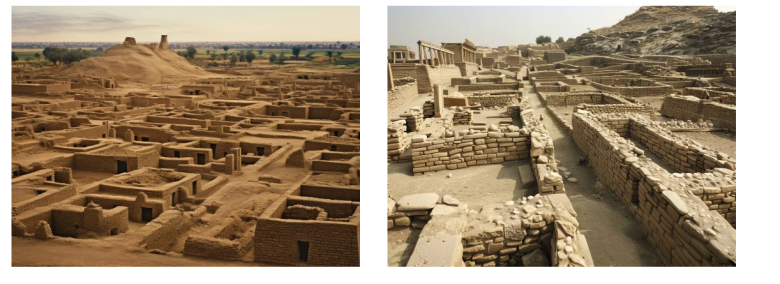
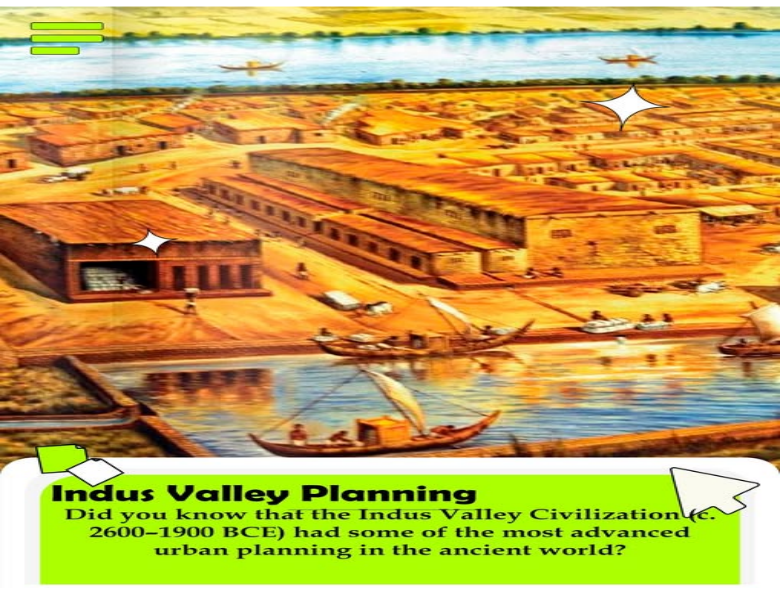
Harappa and Mohenjo-Daro, the most prominent cities of the Indus Valley, provide striking examples of this civilization’s urban planning prowess. The cities were laid out on a precise grid pattern, with streets intersecting at right angles, creating well-organized blocks that facilitated movement and trade. This grid system, a hallmark of modern urban design, was executed with remarkable precision, suggesting the presence of a centralized authority with a clear vision for urban development. The streets were not merely functional pathways but were designed to enhance the flow of goods, people, and ideas, reflecting the dynamic and interconnected nature of Harappan society.
One of the most advanced aspects of the Indus Valley’s urban planning was its sophisticated drainage system. Each house in the cities was connected to a central drainage network, with covered drains running along the main streets. This system was a revolutionary innovation in sanitation, reducing the spread of diseases and ensuring a clean, healthy environment for the inhabitants. The importance placed on hygiene and public health is evident in the extensive planning that went into this infrastructure, showcasing the civilization’s progressive approach to urban living.
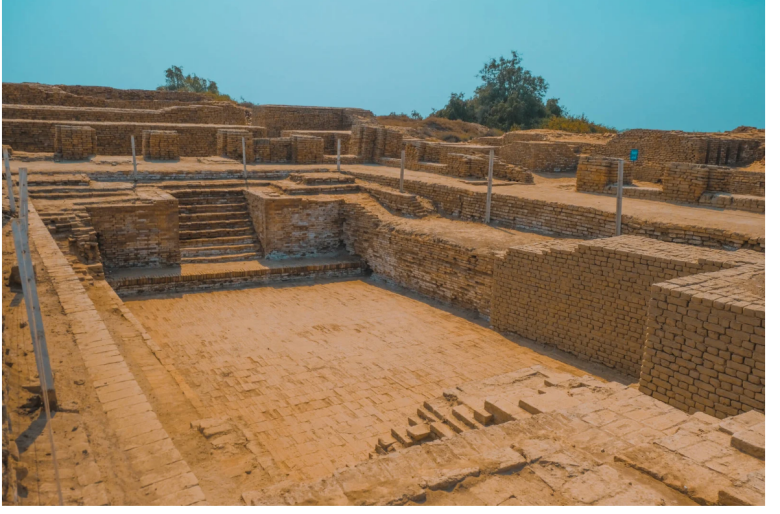
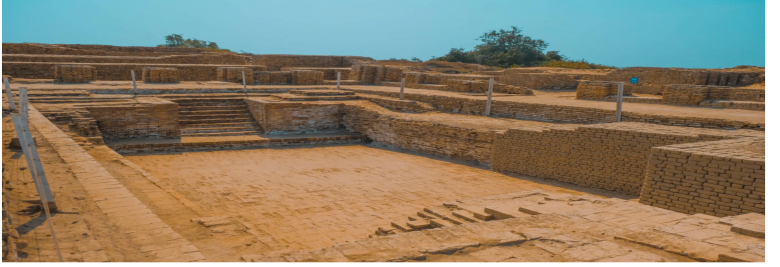
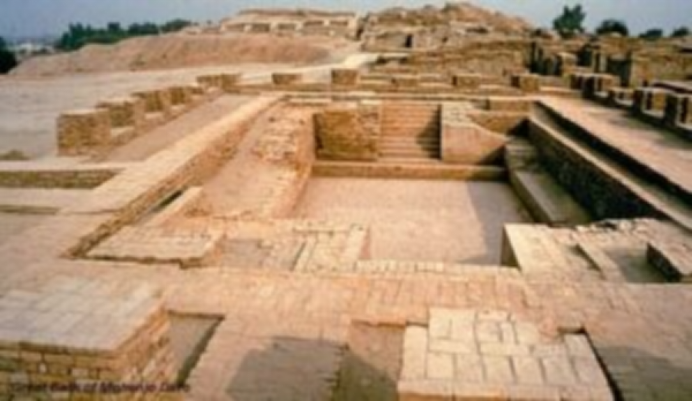
The use of standardized fired bricks in construction across the Indus Valley is another testament to the civilization’s emphasis on uniformity and efficiency. These bricks, used to build everything from houses to public baths, ensured the structural integrity and durability of the buildings. The Great Bath of Mohenjo-Daro, for instance, stands as a remarkable example of this architectural expertise. This large, communal bathing facility was likely a central part of public life, possibly used for both ritualistic and social purposes, underscoring the civilization’s advanced understanding of public architecture.
In addition to their architectural and engineering achievements, the Indus Valley people demonstrated a deep understanding of resource management. The civilization’s proximity to the Indus River allowed for the development of sophisticated irrigation systems that supported agriculture and sustained the urban population. This effective management of water resources, coupled with a thriving trade network that extended as far as Mesopotamia, highlights the civilization’s economic ingenuity.
The social organization of the Indus Valley Civilization is further exemplified by the presence of large granaries in both Harappa and Mohenjo-Daro. These structures indicate a surplus of agricultural produce and the ability to store and distribute food effectively, ensuring the sustenance of a large urban population. The granaries, alongside the intricate urban infrastructure, reflect a highly organized society capable of managing complex economic activities.
The legacy of the Indus Valley Civilization is profound, laying the groundwork for future Indian societies. Its achievements in urban planning, architecture, and resource management continue to inspire and influence modern urban development. As we delve deeper into the remnants of this ancient civilization, we uncover not only the roots of modern city planning but also the enduring spirit of innovation and resilience that has shaped the course of Indian history. The Indus Valley stands as a testament to the brilliance of our ancestors, offering timeless lessons in the art of building and sustaining human civilization.
Urban Planning in the Indus Valley Civilization: Its Modern Relevance
Urban Planning of Indus valley civilization
(Relevant for Historical Section of General Studies Paper Prelims/Mains)
The Indus Valley Civilization (IVC) thrived during its formative years from 3300 to 1300 BCE, followed by its mature phase from 2600 to 1900 BCE. This civilization’s territory stretched alongside the Indus River, encompassing regions that are now found in northeast Afghanistan, Pakistan, and northwest India.
Among the early civilizations of antiquity, including Ancient Egypt and Mesopotamia, the Indus Valley Civilization (IVC) held the widest geographical expanse. Notably, Harappa and Mohenjo-Daro stood as the prominent urban centers of this civilization, emerging around 2600 BCE within the Indus River Valley, specifically within the Sindh and Punjab provinces of present-day Pakistan. The excavation and unveiling of these cities during the 19th and 20th centuries yielded valuable archaeological insights into ancient societies.
Key features of IVC are:
It features an advanced urban planning structure.
The urban layout includes a citadel or acropolis, which was likely inhabited by the ruling elite.
Beneath the citadel in each city, a lower town housed brick residences, occupied by the general populace. Notably, the cities were organized in a grid-like pattern, which is a noteworthy aspect of their design.
The presence of granaries was a significant feature within the Harappan urban centers.
The utilization of fired bricks was a distinctive characteristic of construction in Harappan cities.
The drainage system in Mohenjodaro stood out as remarkably efficient.
In nearly all cities, each dwelling, irrespective of size, possessed its own courtyard and bathroom. Wide streets intersecting at right angles, forming a grid layout, were a prevalent feature in the urban planning of the Harappan cities, echoing a common element in modern urban design.
Influence of Indus valley civilization in present times
Contemporary Chandigarh City: Constructed in modern times, Chandigarh’s layout features a rectangular shape and grid system, promoting efficient traffic movement and a reduced spatial footprint. Similar to the Indus Valley Civilization, a clear distinction between private residences and public areas was maintained.
Upper and Lower Town Layout in the Present: The principles observed in the Indus Valley Civilization appear to have strongly influenced the division of today’s urban landscapes. Historical urban areas were divided into dedicated sections for the elite, housing for the general population, communal bathing facilities, and more. These concepts have significantly influenced the design of current city centers, suburban neighborhoods, governmental edifices, and other modern structures.
Storage Facilities: The design of contemporary storage facilities seems to draw inspiration from ancient trading zones, granaries, and harbor areas.
Effective Drainage Systems: The cities developed during the Indus Valley Civilization boasted sophisticated sewage and water management systems. Numerous archaeological sites from this period featured interconnected houses with varying numbers of rooms, equipped with excellent drainage infrastructure. Similarly, in present-day urban centers, we encounter comparable drainage networks where household waste is channeled through internal systems and ultimately connected to external sewage networks.
Cultural and Religious Continuity: Elements of the Indus Valley Civilization’s religious practices are still observed today. For instance, the deity Pashupati from the IVC is revered as Shiva, and many rituals associated with fertility, as well as the veneration of trees, snakes, and phallic symbols, persist in India and neighbouring regions.
Urban planning in the modern era is inferred to share many characteristics with that of the civilizations of the Indus valley. Town planning at the time was done efficiently and in a futuristic manner using new methods.
The Indus Valley Civilization (IVC) is renowned for its advanced urban planning, including grid-patterned cities and sophisticated drainage systems. It’s remarkable infrastructure and economic networks underscore its major role as an early urban centre. This article aims to study in detail the salient features of the IVC.
About Indus Valley Civilization
The Indus Valley Civilization was one of the world’s earliest urban cultures, flourishing around 2500 BCE in present-day Pakistan and northwest India.
Renowned for its advanced city planning, sophisticated drainage systems, and impressive architectural achievements, it stands out as a major centre of early civilisation in South Asia.
This ancient civilisation is characterised by its well-organized cities, standardised brick constructions, and vibrant trade networks.
The Indus Valley Civilization’s contributions to urban development and trade set foundational precedents for future civilisations.
Read our detailed article on the Indus Valley Civilization (IVC).
Features of Indus Valley Civilization
The salient features of the Indus Valley Civilization are:
V. Gordon Childe was one of the earliest to make attempts to define a city in Harappa and Mohenjodaro.
He described them as symbols of a revolution that marked a new economic stage in society’s evolution.
He said this “Urban Revolution” was neither sudden nor violent. It was a gradual socio-economic change.
While the Indus civilisation shared many general features with contemporary Bronze Age cultures, such as the Sumerian civilisation of Mesopotamia and Old Kingdom Egypt, it had its own distinct identity.
For one thing, with a geographical spread of more than a million square kilometres, this was the largest urban culture of its time.
Unlike in Mesopotamia and Egypt, no grand religious shrines, magnificent palaces, or funerary complexes were constructed for the rulers.
The features of the Indus Valley Civilization have been discussed in detail in the following section.
Administration of Indus Valley Civilization
The Indus Valley Civilization exhibited a highly organised administration through its urban planning and infrastructure.
The intricate layout of cities, including large public buildings like the Great Bath and Granaries, suggests the centralisation of power, which points to a coordinated governance system.
Political Organisation of Indus Valley Civilization
Indus Valley Civilization structures’ size and architectural intricacies, such as the Great Bath, Granaries, elaborate road planning, and flawless large-scale drainage system of Indus valley civilization, are believed to have been made possible by a robust and centralised polity.
In many places, raised habitations at the city’s centre suggest that essential individuals, such as headmen and their council, may have lived there.
The specialised economic organisation and socio-cultural unity in these early civilisations have surprised historians, as the sophistication in craftsmanship could only have been achieved under the patronage of leaders.
Town Panning of Indus Valley Civilization
According to archaeologists Mortimer Wheeler and Stuart Piggot, the Harappan towns exhibited a remarkable unity of conception.
Although established in primitive times, the cities of Indus Valley were characterised by elaborate town planning with a grid pattern orientation of streets and houses, laid out north-south and east-west.
The unity observed in the houses, temples, granaries, and streets was significant. Each city was divided into a raised citadel and a lower town. Harappa, Mohenjodaro, and Kalibangan settlements had a citadel of Indus Valley Civilization on the west side and a lower town on the east.
In contrast, Lothal in Gujarat was a rectangular settlement surrounded by a brick wall without internal division. Harappa and Mohenjodaro used baked bricks, while Kalibangan used mud bricks.
The bricks were standard sizes, cubical, and sun-dried, with some sites using stones for construction.
The most important public place in Mohenjodaro was the Great Bath, which featured a tank in the citadel mound, flights of steps, and side rooms for changing clothes.
The floor was made of burnt bricks and watertight with gypsum. In Mohenjodaro, the Granary was the largest building, while Harappa had six granaries and working floors for threshing grain. Harappa also featured two-roomed barracks.
The drainage system of Mohenjodaro was advanced, with each house having its own courtyard and bathroom.
Street drains were equipped with manholes, and in Kalibangan, many houses had their wells. No other Bronze Age civilisation emphasised health and cleanliness as much as the Harappa did.
Great Bath of Indus Valley Civilization
The Great Bath of Indus Valley Civilization is one of the most famous structures found at the archaeological site of Mohenjo-daro, dating back to around 2500 BCE.
The Great Bath of Indus Valley Civilization is believed to have been used for ritual bathing, indicating the importance of cleanliness and water in the religious and social practices of the time.
Granaries of Indus Valley Civilization
The Granaries of Indus Valley Civilization were large, strategically built structures for storing surplus grains. They were found in cities like Harappa and Daro.
The Granaries of Indus Valley Civilization highlights the civilisation’s advanced agricultural practices and central management of food resources.
Citadel of Indus Valley Civilization
The Citadel of Indus Valley Civilization was a fortified area on a raised platform. It served as a centre for administration and possibly religious activities.
The Citadel of Indus Valley Civilization reflects the civilisation’s advanced urban planning of Harappan civilisation and societal organisation, providing insights into its governance and cultural practices.
Economic Life of Indus Valley Civilization
A stable system of agriculture, supplemented by animal husbandry, hunting, and plant gathering, provided economic sustenance to urban networks. Trade and commerce were significant parts of their economy.
Various items, such as gold, silver, and diamonds, were imported, and finished jewellery, handicrafts, and toys were exported.
The Indus Valley Civilization people were the pioneers in cotton cultivation. Greeks called the Indus Valley Civilization ‘Senden’ or land of cotton.
The Lothal dockyard also testifies to the existence of long-distance trade.
Domestication of Animals of Indus Valley Civilization
Although Harappan people were primarily agriculturists, they also reared animals on a large scale. Domesticated animals included oxen, buffaloes, camels, asses, goats, boars, sheep, dogs, and cats.
Oxen, buffaloes, camels, and asses served as beasts of burden for transportation and agriculture. At the same time, goats, boars, and sheep were used for culinary purposes, with their bones found in many settlements. Dogs and cats were kept as pets, supported by footprints in the settlements.
The humped bulls were particularly favoured, and bones of rhinoceros and elephants found in settlements suggest they might have been hunted and consumed. Evidence of ritual sacrifices involving animals is found in the fire pits at Kalibangan.
Horse remains are mainly absent from Harappan sites, with only a few remains found in the port city of Surkotda and a doubtful terracotta figurine from Lothal and Banawali.
Harappan culture was not horse-centred. Unlike Mesopotamian cities, the Harappan people in Gujarat cultivated rice and domesticated elephants.
Agriculture of Indus Valley Civilization
In earlier times, the Indus region was lush with vegetation and received significant rainfall, contributing to its agricultural prosperity.
The annual inundation of the Indus River replenished the region’s fertility.
The Indus Valley people sowed seeds in November, and when the river’s waters subsided, they harvested barley and wheat.
They utilised ploughshares and stone sickles for cultivation and harvesting. While irrigation was primarily rain-fed, check dams were constructed on rivers, though there is no evidence of canal irrigation.
Two varieties of wheat are frequently found at Harappan sites. They also grew dates, mustard, sesame, and leguminous plants like peas. Granaries were built in cities such as Harappa and Mohenjodaro to store food grains, likely collected as taxes from peasants and used for wage payments.
The Indus people were among the earliest to produce cotton, and a ploughed field has been discovered at Kalibangan in Rajasthan.
Trade and Commerce of Indus Valley Civilization
Most Harappan cities needed more raw materials for the final products they manufactured.
There was no concept of currency, and trade was conducted through the barter system. The Harappan people exchanged finished goods for raw materials.
The Harappans engaged in trade with other world civilisations, such as Mesopotamia and Egypt, as well as with local communities and contemporary tribals.
They had commercial links with settlements in Rajasthan, Karnataka, Afghanistan, and Iran and established a trading colony in northern Afghanistan, facilitating trade with Central Asia. Numerous seals were found during this period.
The Harappans participated in long-distance trade involving Lazuli and established shell work, bangle-making, and bead-making factories in Kalibangan, Chanhu-daro, and Lothal.
These were significant exports. Mesopotamian records from around 2350 B.C. mention trade relations with Meluhha, the ancient name for the Indus region.
Harappan seals and other materials have been discovered in Mesopotamia, extending trade to Sumeria, Babylon, and Egypt.
Weights and Measures of Indus Valley Civilization
Due to constant trade exchanges, the need for uniform weights and measures arose. The Harappans standardised these during the Mature Harappan Phase. Numerous Mesopotamian cylindrical seals have also been found at Harappan sites.
The weight system was primarily based on multiples of 16 (e.g., 16, 64, 160, 320, and 640). The Harappan metric system had a base of 16.
The Harappans practised the art of measurement, using sticks for this purpose. Many such sticks have been excavated.
Transportation of Indus Valley Civilization
With many trade exchanges, a need for easy and quick transportation of goods arose.
With the development of the wheel and the domestication of Oxen and bulls, the mode of transport changed from foot to carts and chariots.
The transport of the goods was also done on camels and asses, which were the beasts of burden.
For long-distance trade through seas, boats would have been used. Such evidence was also found in the depiction of boats on the seals.
Social Life of Indus Valley Civilization
Archaeological findings, such as sculptures, figurines, and seals, can reveal the social life of Indus Valley civilisations.
Their society was divided into two groups: the people who lived in the Citadels and those who lived in the cities.
Nature of Society of Indus Valley Civilization
It was an egalitarian society, as figurines show the prominence of both male and female forms.
In some figurines, bearded men are depicted wearing feminine costumes, suggesting a possible equal status for men and women.
The people of the Indus Valley worshipped both male and female deities. The seal of the male deity Pashupati or Shiva, as well as the figurine of the Mother Goddess, have been found in the excavation of Mohenjo-Daro.
Different from the Egyptian civilisation, where the daughter succeeded the queen, no such succession knowledge has been found for the Indus Valley regions.
Thus, the nature of the society—whether patriarchal or matriarchal—remains inconclusive.
Food Habits of Indus Valley Civilization
The excavations provide little information about the food habits of the Indus Valley civilisation, as no deciphered proof is present. We can infer very little about their food habits only from what remains have been found in the places excavated.
The food choices were region-specific. Wheat and barley were the staple foods for the Harappans in Punjab and Sind. The Harappans of Gujarat preferred millets, and those of Rajasthan preferred barley.
They supplied fat and oil from sesame seeds, mustard, and domesticated animals like buffalo, camels, sheep, and goats. The preference for fruits can be inferred from the seeds of jujube and dates found in excavations.
Burial Practices of Indus Valley Civilization
Burials were a crucial religious activity among human groups. The Harappans buried their dead in a north-south orientation, laying them on their back.
It is believed that the Harappans believed in an afterlife, and so many pots were kept with the dead.
Depending on the deceased’s status, various articles were placed on the burial site, reflecting social stratification in Harappan society.
Generally, the Harappan burials were in brick or stone-lined rectangular or oval pits. The body was usually interred, clothed, shrouded, or in a wooden coffin.
Along with pots, the bodies were buried with jewellery, such as bangles made from shells and steatite beads. Men typically wore earrings, and copper mirrors found among females indicate gender-specific grave goods.
Harappan burials were not as grand as those in Egyptian or Mesopotamian civilisations, and tombs were not found in Harappan sites.
There were variations in burial practices: in Kalibangan, small circular pits containing large urns without skeletal remains, accompanied by pottery, suggest that the dead might have been burned.
In Lothal, some burial sites have both a male and female buried together.
Script of Indus Valley Civilization
The Harappans’ written script still needs to be deciphered. Although attempts have been made to connect it with Sanskrit and Dravidian languages like Tamil and Sumerian, conclusive results have yet to emerge.
Like the ancient Mesopotamians, the Harappans invented the art of writing but did not create long inscriptions like the Egyptians or Mesopotamians. Most inscriptions were recorded on seals and contained only a few words.
Their script was ‘Boustrophedon’, meaning alternate lines were written in opposite directions. The script comprised only pictographs, with about 250 to 400 symbols discovered.
The Indus Valley script was believed to be indigenous to the Indus Valley civilisation and had no connection to other civilisations.
I. Development Divide
Despite the overall uniformity in urban planning, the Indus Valley Civilization exhibited internal development divides between urban and semi-urban or rural settlements. Major cities like Mohenjo-daro and Harappa were highly developed with sophisticated drainage systems, standardized bricks, and organized street grids. In contrast, smaller settlements and peripheral regions showed simpler infrastructure while still adhering to broader Harappan planning principles.
This divide was not necessarily a sign of inequality but rather a functional differentiation. Urban centers acted as administrative, commercial, and manufacturing hubs, while smaller settlements supported agriculture, raw material extraction, and trade logistics. The division of space within cities also highlights planned segregation: the citadel area, often elevated, was reserved for public buildings and administrative functions, while the lower town housed residential structures.
What is striking is that even residential areas across social strata had access to sanitation and drainage. Unlike later civilizations where elite neighborhoods monopolized infrastructure, the Indus Valley model appears to have promoted relatively equitable urban services. Thus, while a development divide existed in scale and function, it did not translate into extreme spatial inequality.
II. Opportunities and Challenges
The geographical location of the Indus Valley provided both immense opportunities and significant challenges. Fertile floodplains of the Indus and its tributaries enabled surplus agricultural production, which supported urban growth. Access to trade routes connecting Central Asia, Mesopotamia, and the Arabian Sea facilitated economic prosperity and cultural exchange.
However, managing river floods, maintaining water supply, and ensuring sanitation in densely populated cities posed constant challenges. The planners responded with innovative solutions: elevated platforms protected cities from flooding, while extensive drainage systems prevented waterlogging and disease. Wells were strategically placed throughout cities, ensuring reliable access to clean water.
Another major challenge was sustaining urban uniformity across a vast geographical area. This was addressed through standardized brick sizes, consistent street layouts, and common construction techniques. However, environmental changes, including shifting river courses and possible climate fluctuations, eventually strained these systems. The inability to adapt rapidly to large-scale ecological changes may have contributed to the civilization’s decline.
III. Strategies for Balanced Development
The Indus Valley Civilization employed several strategies to ensure balanced urban development. One of the most notable was grid-based town planning, with streets laid out in precise north–south and east–west orientations. This not only improved navigation but also facilitated efficient drainage and ventilation.
Another key strategy was decentralized infrastructure access. Almost every house had access to wells, bathrooms, and covered drains connected to a central drainage system. This ensured public health and minimized disease outbreaks—an extraordinary achievement for an ancient civilization.
Zoning was another hallmark of Harappan planning. Industrial activities such as bead-making, pottery, and metalworking were often located in designated areas, reducing pollution in residential zones. Public structures like granaries and assembly halls were centrally located, emphasizing collective welfare over individual display of power.
The use of standardized weights and measures further promoted economic balance, enabling fair trade and reducing exploitation. Together, these strategies reveal a governance model focused on sustainability, efficiency, and social order.
IV. Policy Frameworks and Historical Context
Although the Indus Valley Civilization left no deciphered written records of laws or governance structures, its urban uniformity implies the existence of strong policy frameworks. The consistency in city planning across hundreds of settlements suggests centralized norms or widely accepted civic guidelines rather than arbitrary construction.
These frameworks likely governed building regulations, sanitation standards, and resource allocation. The emphasis on public infrastructure over monumental architecture indicates that policy priorities favored collective well-being. Unlike Mesopotamian or Egyptian civilizations, where rulers displayed power through grand monuments, the Harappan model appears more civic-oriented and possibly governed by councils or merchant elites.
Historically, this approach aligns with a society driven by trade, craftsmanship, and agriculture rather than military conquest. The absence of fortifications in many cities further supports the idea of internal stability and cooperative governance. Such policy frameworks allowed the civilization to maintain urban harmony over several centuries.
V. Case Studies in Integrated Development
Mohenjo-daro
Mohenjo-daro exemplifies integrated urban development. The city featured a massive Great Bath, likely used for ritual or communal purposes, highlighting the integration of social and civic life. Its advanced drainage system, with brick-lined covered drains running beneath streets, demonstrates exceptional engineering.
Dholavira
Dholavira, located in a semi-arid region of Gujarat, showcases innovative water management. The city employed reservoirs, step wells, and channels to collect and store rainwater—an early example of sustainable urban planning adapted to environmental constraints.
Lothal
Lothal stands out as a port city with a dockyard, indicating maritime trade integration. Its urban layout combined commercial, industrial, and residential functions efficiently, reflecting economic adaptability within the broader Harappan framework.
These case studies illustrate how the Indus Valley Civilization tailored its planning strategies to diverse geographical and economic contexts while maintaining core planning principles.
VI. Recommendations for Policy Prioritization
Modern urban planners and policymakers can draw valuable lessons from the Indus Valley Civilization. First, sanitation and water management must remain foundational priorities in urban development. The Harappan emphasis on drainage and clean water access remains relevant in addressing today’s urban health challenges.
Second, standardization combined with local adaptation is crucial. While the Indus cities followed common planning norms, they also adapted to local environmental conditions—a balance modern cities often struggle to achieve.
Third, equitable access to infrastructure should be central to policy design. The relative uniformity of living conditions in Harappan cities contrasts sharply with modern urban inequality and slum proliferation.
Finally, sustainability and resilience must be integrated into long-term planning. The eventual decline of the civilization highlights the importance of adaptability to environmental change, a lesson especially critical in the era of climate change.
Conclusion
The Indus Valley Civilization represents one of humanity’s earliest and most impressive experiments in urban planning. Its cities were not only technologically advanced but also socially inclusive, environmentally responsive, and administratively coherent. Through grid layouts, advanced sanitation, water management systems, and standardized construction, the Harappans created urban environments that rivaled—and in some aspects surpassed—those of much later civilizations.
While the civilization ultimately declined due to a combination of environmental and economic factors, its urban legacy endures as a testament to intelligent planning and collective governance. In an age when modern cities grapple with congestion, inequality, and sustainability challenges, the Indus Valley Civilization offers timeless lessons. Its approach to urban planning was not merely ahead of its time—it remains relevant even today.
The Indus Valley Civilization was a pioneering urban culture notable for its advanced city planning, standardised brick constructions, and sophisticated drainage systems. Despite lacking grand palaces and tombs, its achievements in metallurgy, crafts, and trade were significant. While many aspects of their society, including their script and religious practices, remain mysterious, their legacy in urban development and economic networks highlights their critical role in early South Asian history. The Harappans’ innovations and organisation set foundational precedents for future civilisations.