
Introduction
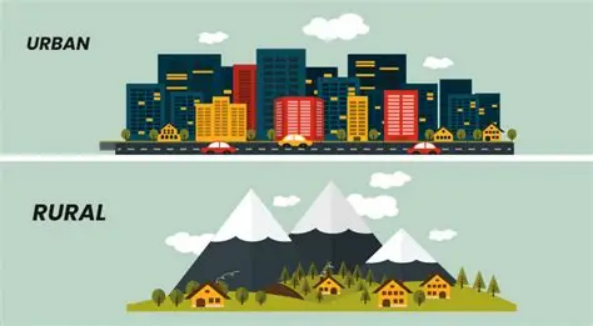
India, as a rapidly developing nation, faces a profound challenge: balancing growth between its burgeoning urban centers and the predominantly rural landscape. While cities are engines of economic productivity, rural areas remain home to over 900 million people (approximately 64.5% of the population as of 2021), who largely depend on agriculture and allied activities. The growing rural-urban divide manifests in disparities in infrastructure, income, access to services, and quality of life. To achieve sustainable, inclusive development, India must craft strategies that simultaneously advance urban innovation and rural resilience.
I. The Rural-Urban Development Divide
1. Economic Disparities
Urban regions dominate in creating high-value job opportunities and attracting investment due to superior infrastructure, concentration of skilled workforce, and market connectivity. In contrast, rural areas are heavily dependent on agriculture, small-scale industries, and seasonal employment. According to NFHS-5 (2019-21), rural multidimensional poverty stands at 19.28%, three times higher than the urban rate of 5.27%. The differential leads to migration pressures, with rural youth moving to cities in search of livelihoods, thereby exacerbating city overcrowding and straining resources.
2. Infrastructure Gaps
- Transport: Urban areas enjoy metro networks, highways, and regional connectivity, while rural regions often rely on undermaintained roads. Despite schemes like the Pradhan Mantri Gram Sadak Yojana (PMGSY), last-mile connectivity remains inadequate, impacting farmers’ access to markets.
- Electricity & Energy: While nearly all villages are electrified, rural energy supply is often inconsistent, limiting industrial and entrepreneurial activities. Decentralized renewable energy, as seen in Gujarat, is a potential solution.
- Water & Sanitation: Initiatives like the Jal Jeevan Mission aim for universal piped water access in rural areas, yet challenges remain in ensuring quality, sustainability, and irrigation support.
- Healthcare & Education: Urban centers provide advanced hospitals and higher education institutions, whereas rural areas face shortages of both facilities and skilled personnel, along with inadequate digital infrastructure.
3. Social and Digital Disparities
The digital divide further reinforces inequities. Urban residents benefit from broadband connectivity, telemedicine, online education, and e-commerce, whereas rural communities often lack reliable access, limiting their participation in the knowledge economy.
II. Urban Development: Opportunities and Challenges
1. Rapid Urbanization
Urban India has grown faster than rural areas, with cities like Bengaluru experiencing nearly a 47% increase in population between 2001-2011. By 2036, the urban population is projected to reach 600 million (approximately 40% of the total).
2. Urban Challenges
- Infrastructure Strain: Legacy systems struggle to cope with population growth, resulting in traffic congestion, inadequate public transport, and insufficient housing.
- Environmental Stress: Pollution, waste management, and water scarcity are pressing issues, with India’s urban population facing high to extreme water stress.
- Social Exclusion: Informal settlements in cities reflect inequality; marginalized groups are often deprived of basic services.
3. Smart and Sustainable Cities
Programs like the Smart Cities Mission, AMRUT, and PMAY-U focus on integrating technology, sustainable housing, and climate-resilient infrastructure. However, challenges in citizen adoption, governance, and financing persist. Urban strategies must emphasize inclusivity, environmental sustainability, and efficient service delivery.
III. Strategies for Balanced Rural-Urban Development
Balanced development requires coordinated approaches that address infrastructure gaps, social inequalities, and economic opportunities.
1. Investment in Rural Infrastructure
Substantial funding is needed for roads, electrification, water supply, irrigation, healthcare, and educational facilities. This creates a foundation for economic activity and reduces migration pressures on cities.
2. Diversification of Rural Economy
Agriculture must be supplemented with small industries, agro-processing units, rural tourism, and digital services. Supporting Farmer Producer Organizations (FPOs), as exemplified by the S M Sehgal Foundation, enhances income, productivity, and market integration.
3. Technology and Digital Inclusion
Expanding broadband, mobile banking, telemedicine, and e-learning can bridge opportunity gaps. Digital tools empower rural inhabitants, enable e-governance, and integrate rural economies into national and global markets.
4. Enhancing Human Capital
Education, skill training, and healthcare are essential. Programs should focus on vocational training, women’s participation, and community health outreach to ensure long-term socio-economic mobility.
5. Innovative Financing
Rural development requires blended finance models:
- Public-private partnerships for cost-effective implementation.
- Development finance institutions for long-term infrastructure investment.
- Local community involvement to ensure utilization and sustainability.
6. Strengthening Governance & Institutional Capacity
Local governance through Panchayati Raj institutions and active citizen participation is crucial. Decentralized decision-making fosters accountability, transparency, and effective resource allocation.
7. Sustainable Development and Climate Resilience
- Integrate green infrastructure and climate adaptation strategies.
- Promote efficient water use and renewable energy.
- Leverage circular economy principles to optimize resources.
8. Urban-Rural Linkages
Cities cannot prosper independently of surrounding rural areas. Integrated regional planning is critical:
- Develop agro-logistics networks connecting villages with city markets.
- Encourage industries and services in tier-2 and tier-3 towns.
- Facilitate flows of technology, knowledge, and capital between rural and urban zones.
IV. Policy Frameworks and Historical Context
India’s planning initiatives, from the First Plan (1951-56) with community development blocks to the Tenth Five-Year Plan, illustrate evolving strategies in rural development, emphasizing:
- Decentralization via Panchayati Raj.
- Minimum Needs Programmes and poverty alleviation.
- Specialized schemes for income generation and skill development.
- Institutional reforms to facilitate participation and accountability.
Urban planning has similarly evolved with the 74th Constitutional Amendment, Smart Cities Mission, and climate-focused initiatives. Future strategies must integrate both rural and urban dimensions for holistic growth.
V. Case Studies in Integrated Development
Kerala
Effective healthcare and high literacy exemplify how targeted investment in rural regions can enhance overall human development.
Gujarat
Solar micro-grids and renewable energy initiatives empower rural economies, reduce dependence, and promote environmental sustainability.
Singapore & Curitiba (International Examples)
Urban models incorporating efficient governance, environmental planning, and multi-modal transport illustrate the benefits of strategic, sustainable urban development linked with regional rural economies.
VI. Recommendations for Policy Prioritization
- Synchronized Planning: Align urban growth strategies with rural development plans to ensure complementary outcomes.
- Fiscal Reforms: Increase rural investment through decentralized revenue mechanisms and performance-based funding.
- Integrated Infrastructure: Develop transport, energy, and communication systems that jointly serve rural and urban populations.
- Capacity Building: Train local leaders, farmers, and civic bodies to efficiently manage resources and projects.
- Technology-Enabled Governance: Utilize data analytics, GIS mapping, and AI-driven planning for evidence-based decision-making.
Conclusion
For India to achieve inclusive, sustainable, and equitable development, urban and rural regions must grow in tandem. Urban innovation and economic growth must be leveraged to enhance rural livelihoods, while rural resilience fosters regional stability, food security, and social equity. Comprehensive strategies combining infrastructure investment, technology, governance reforms, economic diversification, and climate resilience are vital. Only through coordinated action across central, state, and local levels can India bridge the rural-urban divide, reduce disparities, and achieve holistic national development that leaves no one behind.
The future of India’s development depends on embracing balanced urban-rural growth as a strategic, integrated, and inclusive imperative, ensuring that the prosperity of cities uplifts the countryside, leading to a Viksit Bharat that resonates across all geographies.