
Introduction
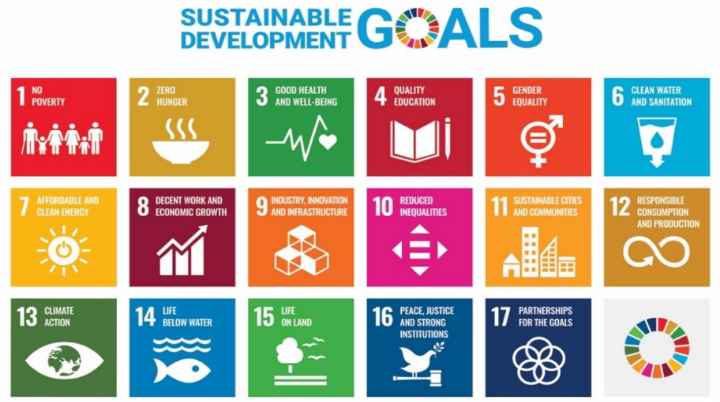
The Sustainable Development Goals (SDGs) established by the United Nations (2015) consist of 17 global goals with 169 targets. These include actions to end poverty, improve health and education, and promote prosperity and well-being by considering environmental sustainability. In fact,the SDGs cover multiple dimensions of development, including social welfare(e.g., education, health, poverty), economic growth (e.g., production and employment, clean energy, industries and infrastructure), environmental sustainability (e.g., ecosystem, water and sanitation, climate change), and effective regulatory rules and governance (e.g., accountability, justice).The 2030 Agenda principle of a “no one will be left behind” philosophy requires global partnership and participation in an integration of environmental, social, economic, and governance dimensions in the process of development. Technology development plays a significant role in achieving SDG targets by improving the efficiency and effectiveness of new and more sustainable ways of development. The creation of new technologies that foster research and stimulate innovation is thus required. These processes can be boosted by strengthened knowledge-sharing and collaboration amongst stakeholders in both national and international contexts.
The adoption of the Sustainable Development Goals (SDGs) by the United Nations in 2015 marked a transformative moment in global development planning. Comprising 17 interconnected goals, the SDGs aim to eradicate poverty, reduce inequality, protect the environment, and ensure peace and prosperity for all by 2030. Achieving these ambitious goals requires innovative approaches, cross-sectoral collaboration, and scalable solutions. Among the most critical enablers of this agenda is technology.
Technology has reshaped economies, governance systems, and social interactions across the globe. From digital platforms that expand access to education and healthcare to renewable energy technologies that combat climate change, technological advancements have become central to sustainable development efforts. However, technology is not a neutral force; its benefits are unevenly distributed, often reinforcing existing inequalities. Therefore, understanding the role of technology in achieving the SDGs requires a balanced examination of its potential, limitations, and governance.
This essay explores the role of technology in achieving the SDGs by examining the development divide, opportunities and challenges, strategies for balanced growth, policy frameworks and historical context, case studies of integrated development, and recommendations for policy prioritization.
How Technology Drives SDG Progress:
SDG 3 (Health): Telemedicine, mobile health apps, and AI diagnostics improve access and outcomes.
SDG 4 (Education): E-learning platforms break down barriers, offering personalized learning.
SDG 7 (Energy): Smart grids and renewable energy tech optimize usage and reduce emissions.
SDG 9 (Innovation): ICT fosters innovation, sustainable manufacturing, and new jobs.
SDG 10 (Inequality): Digital financial services (mobile banking) promote financial inclusion.
SDG 13 (Climate): Remote sensing and data analytics monitor climate impacts and manage resources.
Poverty (SDG 1): AI identifies poverty hotspots, and digital platforms enable secure transactions.
I. Development Divide
The development divide—often referred to as the digital or technological divide—represents the unequal access to technological resources, infrastructure, and capabilities across and within countries. This divide poses a significant challenge to achieving the SDGs, as technology-driven development tends to favor regions with existing economic and institutional advantages.
Developed countries generally benefit from advanced digital infrastructure, high levels of technological literacy, and strong innovation ecosystems. In contrast, many developing and least-developed countries struggle with limited internet access, inadequate electricity supply, low investment in research and development (R&D), and weak institutional capacity. According to global estimates, billions of people still lack reliable access to the internet, restricting their ability to participate in digital economies and access essential services.
The development divide is not only international but also internal. Within countries, disparities exist between urban and rural populations, men and women, and different socioeconomic groups. For example, women in many regions face lower access to digital tools due to cultural norms, education gaps, and affordability issues. These inequalities undermine SDG 5 (Gender Equality), SDG 10 (Reduced Inequalities), and SDG 9 (Industry, Innovation, and Infrastructure).
If left unaddressed, the development divide risks transforming technology into a force that deepens global inequality rather than reducing it. Bridging this divide is therefore a prerequisite for leveraging technology as a driver of sustainable development.
II. Opportunities and Challenges
Opportunities
Technology offers transformative opportunities across all SDGs:
1. Economic Growth and Poverty Reduction
Digital platforms enable financial inclusion through mobile banking and digital payment systems, supporting SDG 1 (No Poverty). Small enterprises gain access to markets, credit, and supply chains through e-commerce and digital tools.
- Health and Well-being
Telemedicine, artificial intelligence (AI)-based diagnostics, and health data systems enhance healthcare access and efficiency, especially in remote areas. These innovations directly contribute to SDG 3 (Good Health and Well-being).
Good health is essential to sustainable development and the 2030 Agenda reflects the complexity and interconnectedness of the two. It takes into account widening economic and social inequalities, rapid urbanization, threats to the climate and the environment, the continuing burden of HIV and other infectious diseases, and emerging challenges such as noncommunicable diseases. Universal health coverage will be integral to achieving SDG 3, ending poverty and reducing inequalities. Emerging global health priorities not explicitly included in the SDGs, including antimicrobial resistance, also demand action.
But the world is off-track to achieve the health-related SDGs. Progress has been uneven, both between and within countries. There’s a 31-year gap between the countries with the shortest and longest life expectancies. And while some countries have made impressive gains, national averages hide that many are being left behind. Multisectoral, rights-based and gender-sensitive approaches are essential to address inequalities and to build good health for all.
III. Education and Skills Development
Online learning platforms, open educational resources, and digital classrooms support SDG 4 (Quality Education). Technology expands access to knowledge and lifelong learning opportunities.
Since 2000, there has been enormous progress in achieving the target of universal primary education. The total enrollment rate in developing regions reached 91 percent in 2015, and the worldwide number of children out of school has dropped by almost half. There has also been a dramatic increase in literacy rates, and many more girls are in school than ever before. These are all remarkable successes.
Progress has also been tough in some developing regions due to high levels of poverty, armed conflicts and other emergencies. In Western Asia and North Africa, ongoing armed conflict has seen an increase in the number of children out of school. This is a worrying trend. While Sub-Saharan Africa made the greatest progress in primary school enrollment among all developing regions – from 52 percent in 1990, up to 78 percent in 2012 – large disparities still remain. Children from the poorest households are up to four times more likely to be out of school than those of the richest households. Disparities between rural and urban areas also remain high.
Achieving inclusive and quality education for all reaffirms the belief that education is one of the most powerful and proven vehicles for sustainable development. This goal ensures that all girls and boys complete free primary and secondary schooling by 2030.
1. Environmental Sustainability
Renewable energy technologies, smart grids, climate modeling, and precision agriculture help address SDG 7 (Affordable and Clean Energy), SDG 13 (Climate Action), and SDG 15 (Life on Land).
2. Governance and Transparency
E-governance systems improve public service delivery, reduce corruption, and enhance citizen participation, advancing SDG 16 (Peace, Justice, and Strong Institutions).
3. Challenges
Despite these opportunities, significant challenges remain:
1.Digital Exclusion
High costs of devices, connectivity, and digital skills limit access for marginalized communities.
2. Job Displacement
Automation and AI threaten traditional employment sectors, raising concerns related to SDG 8 (Decent Work and Economic Growth).
- Data Privacy and Security
The misuse of data, surveillance technologies, and cybercrime undermine trust and human rights.
- Environmental Costs
The production and disposal of electronic devices contribute to e-waste and environmental degradation.
5. Technological Dependence
Over-reliance on imported technologies can weaken local innovation and economic sovereignty in developing countries.
Addressing these challenges requires deliberate policy choices and inclusive technological governance.
III.Strategies for Balanced Technological Development
To ensure technology contributes equitably to the SDGs, balanced strategies must be adopted:
1.Inclusive Digital Infrastructure
Governments must invest in affordable broadband, rural electrification, and public digital access points to ensure universal connectivity.
2.Capacity Building and Digital Literacy
Education systems should integrate digital skills, critical thinking, and innovation training to empower individuals to use technology effectively.
3.Local Innovation Ecosystems
Supporting local startups, research institutions, and indigenous technologies reduces dependency and promotes context-specific solutions.
4.Public-Private Partnerships
Collaboration between governments, private firms, and civil society can mobilize resources and expertise for scalable solutions.
- Ethical and Responsible Technology Use
Technology deployment should align with human rights, environmental sustainability, and social inclusion principles.
Balanced development strategies ensure that technological progress does not come at the cost of equity or sustainability.
IV. Policy Frameworks and Historical Context
Historically, technology has played a central role in development paradigms. The Industrial Revolution transformed economies but also created stark social inequalities and environmental damage. Post-World War II development strategies emphasized industrialization and infrastructure, often neglecting social and environmental considerations.
The transition to sustainable development frameworks emerged in response to these limitations. The Millennium Development Goals (MDGs) focused on basic human needs but paid limited attention to technology. In contrast, the SDGs explicitly recognize technology as a means of implementation, particularly through SDG 17 (Partnerships for the Goals).
Policy frameworks such as national digital strategies, innovation policies, and science and technology (S&T) plans are now integral to development planning. International initiatives encourage technology transfer, capacity building, and South-South cooperation. However, effective implementation depends on coherence across sectors, adequate financing, and institutional accountability.
A strong policy framework must integrate technological advancement with social welfare, environmental protection, and long-term resilience.
V. Case Studies in Integrated Development
1. Digital Financial Inclusion in Kenya
Kenya’s mobile money platform transformed financial access for millions of unbanked citizens. By enabling secure transactions through mobile phones, it supported poverty reduction, entrepreneurship, and financial resilience, contributing to SDGs 1, 8, and 9.
2. Renewable Energy in India
India’s large-scale solar energy initiatives demonstrate how technology can support climate goals while expanding energy access. Decentralized solar solutions in rural areas have improved livelihoods and reduced carbon emissions, aligning with SDGs 7 and 13.
3. E-Governance in Estonia
Estonia’s digital governance model provides efficient public services, transparency, and citizen participation. This integrated use of technology advances SDG 16 and illustrates how digital systems can strengthen institutions.
These cases highlight the importance of contextual adaptation, strong governance, and inclusive design in technological interventions.
VI. Recommendations for Policy Prioritization
- Prioritize Equity in Technology Access
Policies should target marginalized populations, including women, rural communities, and persons with disabilities. - Align Technology with SDG Outcomes
Innovation funding and incentives should be explicitly linked to SDG targets. - Strengthen Regulatory Frameworks
Data protection, cybersecurity, and ethical AI regulations are essential for sustainable digital ecosystems. - Promote Green Technologies
Investment in environmentally sustainable technologies reduces long-term costs and ecological harm. - Enhance Global Cooperation
Technology transfer, knowledge sharing, and financial support are critical for achieving global SDG commitments.
Conclusion
Technology plays an essential role in transforming higher education in India and achieving the Sustainable Development Goals. While the integration of digital tools and platforms has significantly expanded access to quality education, there remain challenges related to infrastructure, digital divides, and faculty readiness. However, with targeted investments in technology, capacity building, and inclusive policies, India can leverage technology to create a more inclusive, equitable, and sustainable higher education system that supports the global agenda for sustainable development.
Technology plays a pivotal role in achieving the Sustainable Development Goals by enabling innovation, efficiency, and inclusivity across economic, social, and environmental dimensions. When harnessed responsibly, technological advancements can accelerate poverty reduction, improve healthcare and education, enhance governance, and protect the planet.
However, technology is not a panacea. Without inclusive strategies, strong policy frameworks, and ethical governance, it risks exacerbating inequalities and creating new challenges. Bridging the development divide, addressing
environmental and social costs, and ensuring equitable access are essential for sustainable outcomes.
Ultimately, the role of technology in achieving the SDGs depends on human choices—how technologies are designed, governed, and deployed. By aligning technological progress with the principles of sustainability, equity, and global cooperation, the international community can transform technology into a powerful instrument for achieving a more just, resilient, and sustainable future for all.