
Introduction
The global food system is at a pivotal crossroads. With a population projected to exceed 9.7 billion by 2050, producing enough nutritious food in a sustainable and equitable way has become one of humanity’s greatest challenges. Traditional agriculture, built over millennia, faces mounting pressures from climate change, resource scarcity, environmental degradation, and shifting dietary preferences. Amid this landscape, lab-grown meat—also referred to as cultured meat, cell-based meat, or cultivated meat—has emerged as a promising innovation with the potential to transform how protein is produced and consumed.
Lab-grown meat is created by harvesting animal cells in vitro and nurturing them into muscle tissue that resembles conventional meat. Unlike conventional livestock systems that require substantial land, water, and feed inputs and contribute significantly to greenhouse gas emissions, cultured meat promises to deliver animal protein with a smaller environmental footprint. Proponents argue that it could reduce the ethical issues associated with industrial animal farming, mitigate zoonotic disease risks, and create new economic opportunities. However, scaling lab-grown meat from lab benches to global dinner plates presents considerable social, economic, technological, and political challenges.
Understanding the role that lab-grown meat might play in future food security necessitates an exploration of inequalities in food systems, the opportunities and obstacles inherent to novel food technologies, the need for balanced development strategies, the policy frameworks that influence innovation and equity, illustrative case studies, and concrete recommendations for policy prioritization.
The global food scene is undergoing profound difficulties driven by complex factors, encompassing population growth, climate change, a condensed period of multiple crises (e.g., wars, geopolitical conflicts, and pandemic-related implications), and evolving consumer preferences [1,2,3]. For instance, the world’s population is predicted to reach an estimated 9.7 billion by 2050 [4], pressing resources management and placing an increasingly urgent demand on producing safe, nutritious, and sustainable food. The rapid increase in the global food demand is accompanied by urbanization, a corresponding increase in environmental impacts, and agricultural expansion, which necessitates the sustainability and resilience of our food systems [5,6].
The Future of Lab-Grown Meat: A Sustainable Solution for the Future
Meat has been a human staple for thousands of years, but the dynamics of meat consumption are evolving. Today, Americans consume nearly 300 pounds of red meat and poultry per capita every year. However, over the past two decades, a shift in attitudes towards health and sustainability has led to a slight decline in meat consumption.
Is it a sign that the meat production landscape is poised for transformation as our world grapples with climate change and a burgeoning global population?
This article delves into the latest progress on one of the potential meat alternatives: lab-grown meat. Also known as cultured or cultivated meat, many think it has the potential to revolutionize our food industry.
Lab-Grown Meat: A Sustainable Alternative
Backed by substantial investments exceeding $2 billion worldwide, lab-grown meat technologies offer significant environmental and economic benefits compared to traditional meat production. Notably, meat production contributes to almost 60% of all greenhouse gas emissions associated with food production, surpassing the pollution generated by plant crop cultivation.
The Lab-Grown Meat Production Process
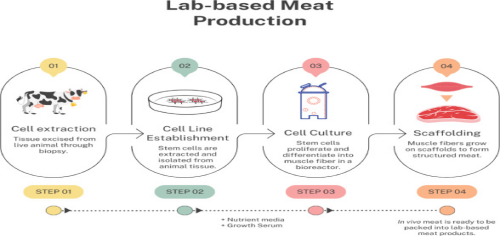
Producing lab-grown meat commences with a minute sample of animal stem cells cultivated in controlled laboratory conditions. Producers introduce essential amino acids and carbohydrates, creating an optimal environment for cell multiplication. These cells follow the genetic blueprint of animal muscle tissue, resulting in a product closely resembling ground beef. At an industrial scale, lab-grown meat is cultivated in large stainless steel vats and then undergoes additional processing to render it the texture and appearance of conventional cuts of meat.
Why the Investment Makes Sense
The eventual inevitability of cultivated meat products on store shelves and in the wholesale food service supply stream presents a range of advantages and disadvantages that impact the food industry and the broader economy.
As with most emerging technologies, the long-term implications remain subject to speculation. Nevertheless, the food industry is committed to making lab-grown meat a reality in the near future.
The Benefits of Cultivated Meat
Cultivated meat products offer a range of benefits to suppliers, consumers and the planet.
Sustainable supply. Lab-grown meat can help to meet the rising global demand for meat more sustainably. While US meat consumption has seen a modest decline, global meat consumption has doubled over the past two decades, with projections indicating a further 13% increase by 2030. Experts anticipate that alternative proteins, including plant-based options and lab-grown meats, will be crucial in meeting this growing demand.
Land use efficiency. Traditional livestock farming occupies approximately 70% of the world’s arable land, limiting the space available for plant crop cultivation. Lab-grown meat has a land use footprint 99% smaller than industrial-scale livestock farming, conserving valuable agricultural land.
Water conservation. Lab-grown meat is remarkably efficient in water usage, requiring between 82% and 96% less water per kilogram than conventional beef production. This reduction is significant given that beef production consumes an astounding 15,415 liters of water per kilogram.
Regional sustainability. Globalized food production, with meat transported across long distances, exacerbates environmental issues. Lab-grown meat could offer regional and local alternatives that are both environmentally sustainable and economically viable.
Improved animal welfare. Advocates of meat alternatives often cite concerns about the inhumane treatment of factory-farmed animals. Lab-grown meat and plant-based proteins can potentially reduce the demand for conventionally farmed meat and the harvesting of animals.
Potential Consequences of Lab-Grown Meat
Even though it offers numerous benefits, introducing lab-grown meat into the market may have some harmful real-world effects.
1. Employment impact: If the market price of lab-grown meat drops low enough to compete with traditional agriculture and meat processing, it could shift employment away from these sectors.
2. Overconsumption concerns: There is a theoretical worry that the availability of low-fat lab-grown meat might lead to increased consumption in specific populations, exacerbating the global obesity crisis.
The Road Ahead: Regulation and Adoption
The US Food and Drug Administration (FDA) has begun approving lab-grown meat products, expecting to see these options in restaurants as early as 2023, and on retail shelves by 2028. However, it may still take years and possibly even decades before the lab-grown meat industry can capture a significant market share. But leading food industry giants, such as Tyson Foods and JBS Foods, are actively supporting this endeavor with venture capital.
Are Consumers Ready?
While the demand for sustainably produced foods is rising, the transition to lab-grown meats may take time. A study revealed that 35% of meat-eaters and 55% of vegetarians are not interested in trying lab-grown meat. However, as consumer attitudes evolve and they become more accustomed to the idea, the adoption of lab-grown meat may gain momentum.
Be Ready for What Comes Next with Tilley Distribution
Lab-grown meat represents a promising avenue for transforming the traditional meat production landscape, addressing climate change and enhancing food security in a world with a growing population. With significant investments, growing consumer interest and regulatory approvals, the era of lab-grown meat is likely on the horizon. While challenges and uncertainties remain, the potential benefits make it a compelling solution for our changing world. Expand your organization’s horizons with a proven ingredients partner. Speak with a Tilley Distribution representative today.
This review article examines the multifaceted dimensions that collectively constitute the future of food (Figure 1). Starting from critical aspects that encompass sustainable food production, alternative protein sources, culinary innovations, the impact of biotechnology, health-related trends, and the digitalization of the food chain, the review delves into food safety, security, and resilience strategies and the role of circular bioeconomy in sustainable food systems. By weaving together insights from these diverse domains and web of factors, the goal is to provide food researchers with a holistic view of the dynamic trajectory the food industry is embarking upon. The latter should be defined by innovation, adaptability, and a shared commitment to a resilient and nourishing global food system.
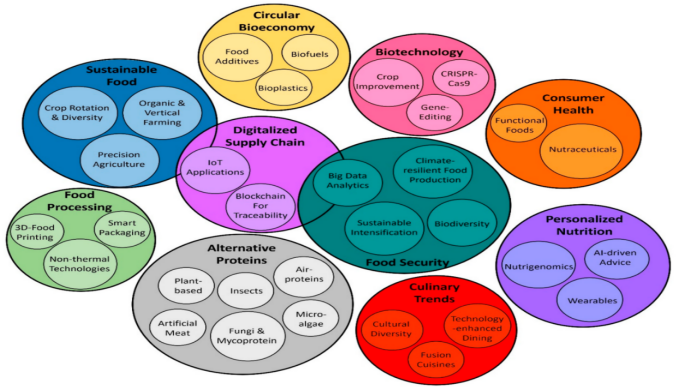
Figure 1. Illustration of the dimensions that constitute the future of food.
The review is part of the research performed in the SecureFood project and deliverable D2.1 scheduled for November 2024 of the SecureFood Project.
2. Sustainable Food Production
To adequately feed the projected global population of 10 billion by 2050, global food production should increase by at least 70% [20,21]. However, the old practice of simply growing food production without enhancing the efficiency of the food systems belongs to the past. The rising demand for processed foods coupled with the depletion of resources has led the industry to increase its attention towards sustainability. Achieving sustainability is a complex endeavor that requires changes in food consumption patterns, including reducing the link between income and animal product consumption, updating existing farming models, investing in climate-resilient agricultural systems, and proactive policies for structural development in agriculture and food trade regulation [22]. It also necessitates reconsidering agricultural practices, reducing food loss and waste, maximizing the conversion of raw materials into consumer products, and integrating and collaborating activities across all stages from farm to fork [3,23,24].
I. Development Divide:Inequalities in Access and Innovation
The concept of food security is multidimensional, encompassing availability, access, utilization, and stability. Historically, the capacity of societies to feed their populations has been shaped by geographic, economic, and technological factors. Developed countries with advanced agricultural infrastructure have benefited from mechanization, high yields, and global trade networks, while many developing countries continue to struggle with hunger, malnutrition, and structural barriers to productivity.
The arrival of lab-grown meat technologies highlights an emerging development divide in which cutting-edge innovations may become concentrated in wealthier economies. Early adopters of cultured meat are primarily companies based in North America, Europe, and East Asia where venture capital, skilled labor, and regulatory capacity are abundant. These regions also tend to be early markets for premium‐priced products. In contrast, food producers and consumers in low- and middle-income countries may face limited access to such innovations due to higher costs, inadequate infrastructure for production and distribution, and competing development priorities.
This divide has two implications for food security:
Access Inequality: If novel food technologies such as lab-grown meat become luxury products, they risk deepening nutritional inequities rather than alleviating them. Populations already vulnerable to food insecurity might see little benefit if cultured meat remains beyond their economic reach.
Innovation Gaps: Regions with limited research and development (R&D) capacity may be left out of shaping emerging food futures. This raises concerns about technological sovereignty and whether global food systems will meet diverse cultural, ecological, and nutritional needs.
Addressing the development divide requires strategies that intentionally bridge gaps in access to technologies, build local capacities, and integrate innovations with broader food system priorities rather than allowing them to become isolated high-tech solutions.
II. Opportunities and Challenges
Opportunities
1. Environmental Sustainability
One of the most compelling arguments for lab-grown meat is its potential to reduce environmental pressures associated with livestock systems. Conventional animal agriculture contributes significantly to greenhouse gas emissions, deforestation, water use, and biodiversity loss. Cultured meat production, particularly if powered by renewable energy and efficient bioprocessing techniques, could lower emissions and conserve resources. Estimates suggest that cultured meat could reduce land use by up to 99% and water use by up to 96% compared to conventional beef production, though results vary by production methods.
2. Animal Welfare
Cultured meat eliminates the need for raising and slaughtering animals, addressing ethical concerns related to factory farming. For consumers motivated by animal welfare, lab-grown meat offers a way to enjoy familiar protein sources without contributing to animal suffering.
3. Human Health and Food Safety
Lab-grown meat production occurs in controlled environments, potentially reducing the risk of contamination by pathogens like E. coli and Salmonella, which are prevalent in traditional meat supply chains. Additionally, cultured meat can be engineered to contain healthier fat profiles, offering opportunities to improve nutritional outcomes.
4. Innovation-Driven Economies
The development of cultured meat industries could stimulate economic growth, generate highly skilled jobs, and catalyze advancements in biotechnology, material science, and biomanufacturing. These spillover effects can benefit broader sectors beyond food.
Challenges
1. Cost and Scalability
Currently, cultured meat production remains expensive compared to conventional animal agriculture. High costs stem from growth media (nutrient solutions for cell culture), bioreactors, and the absence of large-scale industrial processes. Scaling production affordably is a major technological and economic challenge.
2. Regulatory and Consumer Acceptance
Regulatory frameworks for lab-grown meat are still evolving. Ensuring safety and transparency while enabling innovation is a complex task for policymakers. Moreover, consumer acceptance varies widely by region, culture, and individual attitudes toward food technologies. Skepticism or aversion rooted in perceptions of “unnaturalness” may slow adoption.
3. Energy Inputs
Depending on manufacturing processes, cultured meat could require significant energy, especially in controlled environments. Without a transition to renewable energy, benefits for climate mitigation may not be fully realized.
4. Social and Cultural Barriers
Food is deeply rooted in cultural and social practices. Some communities may resist replacing traditional meat with lab-grown alternatives due to taste preferences, identity, or skepticism toward novel foods. Equitable systems must respect cultural values while expanding food options.
III. Strategies for Balanced Development
Creating a future of food that integrates lab-grown meat in a way that enhances global food security requires balanced development strategies tailored to diverse contexts. Key approaches include:
1. Inclusive Innovation Ecosystems
Governments, universities, industry, and civil society should collaborate to ensure that food technology innovation is inclusive. Public-private partnerships can facilitate knowledge transfer and capacity building in low- and middle-income countries. These collaborations can also prioritize open-source platforms and shared research to democratize access to technology.
2. Affordable Production Models
To reduce costs, researchers and companies are exploring alternative growth media (including plant-based or microbial hydrolysates) and optimizing cell lines for efficiency. Policies that support R&D funding and incentives for cost-reducing innovations can accelerate progress.
3. Sustainable Energy Integration
Aligning cultured meat production with renewable energy systems is critical to minimizing environmental footprints. Localized production facilities that use solar, wind, or bioenergy can cut emissions and reduce dependence on centralized fossil-fuel-intensive grids.
4. Community Engagement and Education
Engaging communities in conversations about food technology can build trust and awareness. Educational campaigns should address nutritional benefits, safety, and environmental considerations while being sensitive to cultural perspectives. Co-creation approaches that involve consumers in product development can spur acceptance.
5. Tiered Market Strategies
To prevent high-tech food from becoming an elite product, strategies such as differential pricing, subsidies, or integration with social programs can make cultured meat available to broader populations. Collaboration with food aid and nutrition initiatives could allow lab-grown proteins to supplement vulnerable diets where appropriate.
IV. Policy Frameworks and Historical Context
The introduction of lab-grown meat is not simply a scientific milestone; it is part of a long arc of food system transformations influenced by policy, economics, and cultural change.
Historically, agricultural revolutions have reshaped societies. The Neolithic transition moved humans from foraging to farming. The Columbian Exchange transformed diets globally through the exchange of crops like potatoes and maize. The 20th-century Green Revolution harnessed high-yield crop varieties, synthetic fertilizers, and mechanization to greatly increase food production, reducing hunger in many regions but also contributing to environmental damage and deepening inequalities.
Today’s food system is similarly in flux. Policies concerning trade, land use, subsidies, and research investment shape what foods are produced and who benefits. For example:
Subsidies and Market Supports: Many high-income countries subsidize conventional livestock and feed crops, reinforcing established agricultural systems. Redirecting subsidies toward sustainable practices and novel proteins can level the playing field.
Regulatory Approvals: Agencies like the U.S. Food and Drug Administration (FDA) and European Food Safety Authority (EFSA) are developing guidelines for cultured meat safety evaluations. Transparent, science-based regulation is essential for market access and public trust.
Intellectual Property Rights: Patent systems that concentrate control of key technologies in a few corporations could limit competition and access. Policymakers must balance incentives for innovation with public interest.
Understanding the historical interplay of policy and food systems can help avoid repeating past mistakes where innovations benefited a few while leaving others behind. Intentional policy design can help ensure that the future of food enhances equity and sustainability.
V. Case Studies in Integrated Development
While lab-grown meat is still emerging, several initiatives illustrate how integrated strategies can advance food innovation alongside food security goals.
Case Study 1: Singapore’s Regulatory Leadership
Singapore became the first country to approve cultured meat for sale, granting regulatory clearance in 2020 to a pilot product. Singapore’s proactive regulatory environment balances safety with innovation and has attracted investments from cultured meat companies. The government’s support for research and willingness to engage with startups demonstrates how forward-looking policy can catalyze industry development.
Case Study 2: Public Research in the Netherlands
The Netherlands has invested significantly in cellular agriculture research through public institutions and partnerships with industry. Dutch research groups focus on improving cell culture media and scalable bioreactor design. Public research investment lowers barriers for smaller companies and contributes to shared knowledge rather than proprietary control.
Case Study 3: Collaborative Platforms in Developing Regions
In some developing regions, agricultural innovation platforms bring together farmers, researchers, and policymakers to address local food security challenges. Though not specifically focused on cultured meat, these platforms demonstrate how collaborative approaches can integrate new technologies with traditional systems. Incorporating cultured protein research into similar frameworks can help adapt innovations to local contexts and nutritional needs.
VI. Recommendations for Policy Prioritization
To harness the promise of lab-grown meat for food security, policymakers should prioritize the following:
1. Support Inclusive R&D Funding
Allocate public funding for cultured meat research with mandates for openness, shared knowledge, and technology transfer to ensure broad benefits. Encourage collaborations between institutions in high-income and low-income regions.
2. Reform Agricultural Subsidies
Gradually restructure subsidies to reward sustainability outcomes, including reduced greenhouse gas emissions, resource conservation, and innovation in alternative proteins. Redirect support toward diversified protein sources including cultured meat, plant-based proteins, and regenerative livestock practices.
3. Build Regulatory Capacity
Develop clear, transparent, and scientifically grounded regulatory pathways for novel foods. Support regulatory harmonization across regions to reduce barriers to trade and innovation while maintaining safety standards.
4. Invest in Education and Outreach
Fund public education campaigns and participatory engagement to build consumer literacy about food technologies, addressing misconceptions and cultural concerns. Community dialogues can help shape products that align with local tastes and values.
5. Ensure Equitable Access
Design policies that prevent cultured meat from becoming accessible only to affluent consumers. Tools may include subsidies for affordable product lines, inclusion in public food programs, and incentives for companies that commit to equitable pricing strategies.
6. Integrate with Sustainability Goals
Embed cultured meat strategies within broader national and global sustainability targets, such as Nationally Determined Contributions under the Paris Agreement and the United Nations Sustainable Development Goals (SDGs), particularly SDG 2 (Zero Hunger), SDG 12 (Responsible Consumption and Production), and SDG 13 (Climate Action).
Conclusion
The future of food is unfolding in an era of unprecedented challenges and opportunities. Lab-grown meat represents a transformative innovation with the potential to contribute to environmental sustainability, animal welfare, and diversified protein sources. Yet the promise of cultured meat will not be realized automatically; its integration into global food systems depends on deliberate strategies that address economic accessibility, technological scalability, cultural acceptance, and equitable policy frameworks.
Bridging the development divide requires intentional inclusion—ensuring that innovations do not further entrench disparities but instead contribute to a more resilient, nutritious, and sustainable food future for all. By learning from historical food system transformations, investing in shared innovation, designing responsive regulations, and centering equity in policy decisions, societies can shape a future of food that nourishes both people and the planet.
Achieving sustainable food production in the decades to come is a multifaceted challenge that requires comprehensive changes across various aspects of the food supply chain. Embracing crop rotations, organic farming, agroforestry, and vertical farming is crucial for optimizing agricultural productivity and resource management. Moreover, the future of food relies on innovative approaches that balance nutrition, health, and environmental responsibility. With innovations such as 3D printing, smart packaging, and non-thermal technologies, food processing technologies continue to evolve. The digitalization of the food supply chain through Industry 4.0 technologies offers excellent potential to address the challenges and enhance traceability, transparency, and food safety while optimizing supply chains, reducing food loss and waste, and promoting food security at the same time. Food security and climate-resilient supply chains are bound to alternative protein sources and the utilization of food processing by-products and waste that align with a climate-neutral, circular bioeconomy and sustainable development goals. Crop productivity and food security can be enhanced by using genome editing tools (e.g., CRISPR/Cas9). The ongoing research addresses the challenges related to nutritional completeness, consumer acceptance, safety, and regulations. Finally, the evolving food landscape embraces cultural diversity, culinary innovation, and sustainability trends, emphasizing traditional, locally sourced, and organic foods, sustainable dining practices, and personalized nutrition. In this ever-evolving food landscape, our collective commitment to innovation, sustainability, and the well-being of both people and the planet will shape a future where food inspires a positive change and resilience for future generations.