
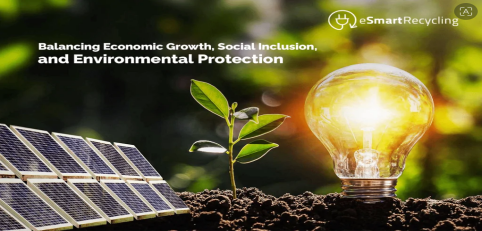

Introduction
The contemporary world faces a defining challenge: how to sustain economic growth while preserving the natural environment on which all human activity ultimately depends. Since the Industrial Revolution, economic development has largely relied on intensive resource extraction, fossil fuel consumption, and industrial expansion, leading to environmental degradation, climate change, biodiversity loss, and public health crises. As these environmental consequences intensify, the traditional growth model has come under increasing scrutiny. In this context, green technology—technologies designed to reduce environmental harm while enhancing efficiency and productivity—has emerged as a promising solution.
Green technology includes renewable energy systems, energy-efficient infrastructure, sustainable agriculture, waste-to-energy systems, green transportation, and digital innovations that optimize resource use. Proponents argue that such technologies can decouple economic growth from environmental degradation, enabling societies to achieve prosperity without exceeding ecological limits. Critics, however, question whether green technology can scale fast enough, remain affordable, and deliver equitable benefits across developed and developing economies.
This essay examines whether green technology can realistically balance economic growth and environmental protection. It explores the development divide between nations, the opportunities and challenges associated with green technology adoption, strategic pathways for achieving balance, relevant policy frameworks and historical context, real-world case studies, and policy recommendations. Ultimately, the essay argues that while green technology alone is not a panacea, it is a critical pillar for achieving sustainable and inclusive development when supported by effective policies, institutions, and social commitment.
Environmental Economics: Balancing Economic Growth and Environmental Protection
Environmental economics is a field of economics that explores the relationship between economic activity and the environment. It aims to understand how economic processes impact the natural world and, conversely, how environmental changes influence economic systems [1]. As the global population continues to grow and industrialization expands, environmental concerns such as climate change, resource depletion, and pollution have become increasingly urgent. Environmental economics provides tools to address these issues by evaluating the costs and benefits of environmental policies and helping to design sustainable economic practices. In this article, we will examine the core principles of environmental economics, its importance, and how it contributes to creating a more sustainable future.
The Core Principles of Environmental Economics Environmental economics is built on several foundational principles that distinguish it from traditional economic theories [2]. The main focus is on the allocation of natural resources and the management of environmental goods and services in a way that ensures long-term sustainability. Key concepts include: Externalities: In environmental economics, externalities refer to the unintended side effects of economic activities that affect third parties. For example, a factory that pollutes a river creates negative externalities, such as poor water quality, which affects local communities and ecosystems. These externalities are often not accounted for in market transactions, leading to inefficient outcomes. Environmental economists work to internalize these externalities, meaning they try to ensure that businesses bear the full costs of their actions, thus encouraging more responsible behavior [3].
Market failures and public goods: A market failure occurs when the allocation of goods and services by the free market is inefficient, leading to a loss of societal welfare. Environmental economics identifies several market failures related to the environment, such as the overuse of common resources (e.g., overfishing) or the underproduction of public goods (e.g., clean air and water). Public goods are non-rivalrous (one person’s use does not reduce availability to others) and non-excludable (people cannot be excluded from using them), making it difficult for the market to provide them efficiently. Environmental economists advocate for government intervention to correct these market failures [4]. Cost-benefit analysis: A key tool in environmental economics is cost-benefit analysis (CBA), which is used to evaluate the economic feasibility of environmental policies. CBA compares the costs of implementing a policy (such as reducing emissions or protecting a natural habitat) with the expected benefits (such as improved public health or preserved biodiversity). This analysis helps policymakers determine the most cost-effective strategies to address environmental problems. Valuation of ecosystem services: Ecosystem services are the benefits that humans receive from the natural environment, such as clean water [5], pollination of crops, and climate regulation. Environmental economics seeks to assign monetary values to these services, which are often overlooked in traditional market transactions. By recognizing the economic value of ecosystem services, environmental economics advocates for their protection and sustainable management.
Challenges in Environmental Economics While environmental economics provides valuable tools for addressing environmental issues, there are several challenges in applying these concepts to real-world problems: Measurement and valuation: One of the main challenges in environmental economics is accurately measuring and valuing environmental goods and services. Many ecosystem services, such as biodiversity, do not have a clear market price, making it difficult to assign a monetary value [10]. Additionally, the longterm nature of environmental issues, such as climate change, complicates the process of forecasting the costs and benefits of policies. Global coordination: Environmental problems, such as climate change and pollution, are global in nature and require coordinated efforts across borders. However, international cooperation can be difficult due to differing economic priorities, political ideologies, and levels of development among countries. Developing global solutions to environmental issues requires effective diplomacy and collaboration. Equity and fairness: Environmental policies must also address issues of equity and fairness. While climate change and environmental degradation affect everyone, poorer countries and communities are often the most vulnerable to these impacts. Environmental economists must design policies that take into account the distributional effects of environmental protection measures, ensuring that the costs and benefits are shared equitably
RETRACTED ARTICLE: Recent advances in green technology and Industrial Revolution 4.0 for a sustainable future
Abstract
This review gives concise information on green technology (GT) and Industrial Revolution 4.0 (IR 4.0). Climate change has begun showing its impacts on the environment, and the change is real. The devastating COVID-19 pandemic has negatively affected lives and the world from the deadly consequences at a social, economic, and environmental level. In order to balance this crisis, there is a need to transition toward green, sustainable forms of living and practices. We need green innovative technologies (GTI) and Internet of Things (IoT) technologies to develop green, durable, biodegradable, and eco-friendly products for a sustainable future. GTI encompasses all innovations that contribute to developing significant products, services, or processes that lower environmental harm, impact, and worsening while augmenting natural resource utilization. Sensors are typically used in IoT environmental monitoring applications to aid ecological safety by nursing air or water quality, atmospheric or soil conditions, and even monitoring species’ movements and habitats. The industries and the governments are working together, have come up with solutions—the Green New Deal, carbon pricing, use of bio-based products as biopesticides, in biopharmaceuticals, green building materials, bio-based membrane filters for removing pollutants, bioenergy, biofuels and are essential for the green recovery of world economies. Environmental biotechnology, Green Chemical Engineering, more bio-based materials to separate pollutants, and product engineering of advanced materials and environmental economies are discussed here to pave the way toward the Sustainable Development Goals (SDGs) set by the UN and achieve the much-needed IR 4.0 for a greener-balanced environment and a sustainable future.
Graphical abstract

How Does Green Technology Affect Economic Growth?
Fundamentals
The query “How Does Green Technology Affect Economic Growth?” initiates a crucial exploration into the relationship between environmental sustainabilityThe central library for sustainability, defining the core concepts for coexisting with Earth’s biosphere in equilibrium. and financial prosperity. Green technology, at its core, represents innovations aimed at mitigating environmental impact while enhancing resource efficiency. This encompasses a wide array of sectors, from renewable energy sources like solar and wind power to energy-efficient buildings, sustainable agriculture, and advanced waste management systems. Understanding its influence on economic growth requires acknowledging that traditional economic models often overlooked environmental externalities, treating natural resources as limitless and free.
Initially, some might perceive green technology as a cost burden, an additional expense that could hinder economic progress. This perspective often stems from the upfront investments required for transitioning to cleaner technologies. For instance, establishing solar farms or upgrading manufacturing processes to reduce emissions necessitates significant capital expenditure.
However, this viewpoint is increasingly challenged by a growing body of evidence and expert consensus that recognizes the long-term economic benefits of green technology. These benefits extend beyond mere environmental protection and tap into new avenues for economic expansion and societal well-being.
One of the most direct ways green technology stimulates economic growth is through the creation of new industries and jobs. The shift towards a green economy necessitates a workforce skilled in renewable energy installation, sustainable construction, environmental engineering, and related fields. This burgeoning sector offers employment opportunities in manufacturing, research and development, services, and maintenance, diversifying economies and reducing reliance on traditional, often environmentally damaging, industries. Consider the exponential growth of the solar panel industry, which has not only provided clean energy but also generated millions of jobs globally.
Furthermore, green technologies can lead to significant cost savings in the long run. Investing in energy efficiency, for example, reduces operational expenses for businesses and households alike. Buildings designed with energy-saving features require less energy for heating and cooling, translating into lower utility bills.
Similarly, transitioning to electric vehicles can decrease transportation costs due to lower fuel and maintenance requirements. These savings can free up capital for further investment and consumption, driving economic activity.
Green technology also enhances resource security and reduces dependence on volatile global commodity markets. Countries that invest in renewable energy sources become less reliant on imported fossil fuels, which are subject to price fluctuations and geopolitical instability. This energy independence strengthens national economies and provides a buffer against external economic shocks. Moreover, efficient resource management, promoted by green technologies, ensures the sustainable availability of essential resources for future economic activities.
Green technology acts as a catalyst for economic growth by fostering innovation, creating new industries, and enhancing resource efficiency.
Beyond these direct economic benefits, green technology contributes to improved public health and environmental quality. Reducing pollution through cleaner energy and industrial processes leads to decreased respiratory illnesses and other health problems, lowering healthcare costs and increasing workforce productivity. A healthier environment also supports vital sectors like agriculture and tourism, which are directly dependent on natural resources and ecosystem services. Clean air and water are not just environmental amenities; they are fundamental prerequisites for sustained economic prosperity and societal well-being.
In summary, while the initial investment in green technology may seem like a hurdle, the long-term economic advantages are substantial and far-reaching. From job creation and cost savings to resource security and improved public health, green technology is not just an environmental imperative but also a powerful engine for sustainable economic growth. It represents a paradigm shift towards a more resilient, equitable, and prosperous future.

Intermediate
Moving beyond the foundational understanding of green technology’s impact, a deeper analysis reveals a more intricate and dynamic relationship with economic growth. The transition to a green economy is not merely about substituting old technologies with new ones; it signifies a fundamental restructuring of economic systems, innovation pathways, and societal values. This section will explore the intermediate complexities, examining how green technology acts as a driver of systemic change and long-term economic transformation.
One crucial aspect is the role of innovation and technological diffusion. Green technologies are often at the forefront of innovation, pushing the boundaries of science and engineering. Investments in renewable energy, advanced materials, and smart grids stimulate research and development, leading to technological breakthroughs that can have spillover effects across various sectors of the economy.
For instance, advancements in battery technology, initially driven by the electric vehicle industry, are now finding applications in energy storage, consumer electronics, and grid stabilization. This cross-sectoral innovation is a hallmark of green technology’s economic impact.
The adoption of green technology also fosters new business models and market opportunities. The circular economy, for example, is a business paradigm enabled by green technologies that emphasizes resource efficiency, waste reduction, and product longevity. Companies are increasingly exploring models of product-as-a-service, remanufacturing, and closed-loop recycling, creating new revenue streams and reducing reliance on virgin materials. These innovative business approaches not only contribute to environmental sustainability but also enhance competitiveness and resilience in a resource-constrained world.
Furthermore, green technology plays a vital role in enhancing infrastructure resilience. Climate change is already impacting economies through extreme weather events, resource scarcity, and environmental degradation. Investing in climate-resilient infrastructure, such as flood defenses, drought-resistant agriculture, and decentralized renewable energy systems, is crucial for mitigating these risks and ensuring long-term economic stability. Green infrastructure, like urban green spaces and restored ecosystems, also provides valuable ecosystem services, such as flood regulation, air purification, and carbon sequestration, further bolstering economic resilience.
However, the transition to a green economy is not without its challenges. Job displacement in traditional fossil fuel industries is a significant concern that requires careful planning and social safety nets. While green jobs are being created, they may not always be in the same locations or require the same skill sets as jobs lost in declining sectors. Therefore, retraining and education programs are essential to ensure a just transition that minimizes social disruption and maximizes the benefits of the green economy for all.
The economic benefits of green technology are amplified through systemic changes, driving innovation, fostering new business models, and enhancing infrastructure resilience.
Another challenge lies in financing the green transition. The upfront capital costs for green technologies can be substantial, and access to finance may be a barrier, particularly for developing countries and small and medium-sized enterprises (SMEs). Innovative financing mechanisms, such as green bonds, carbon markets, and public-private partnerships, are needed to mobilize the trillions of dollars of investment required to achieve global climate goals and unlock the full economic potential of green technology. Furthermore, policy frameworks that provide clear and consistent signals, such as carbon pricing and renewable energy mandates, are crucial to de-risk green investments and create a level playing field.
In conclusion, the intermediate perspective on green technology and economic growth reveals a complex interplay of opportunities and challenges. While green technology offers immense potential to drive innovation, create new markets, and enhance resilience, realizing these benefits requires proactive policies, strategic investments, and a commitment to a just transition. Navigating these complexities effectively is key to harnessing the transformative power of green technology for sustainable and inclusive economic prosperity.

Academic
From an academic standpoint, the nexus between green technology and economic growth demands a rigorous, multi-faceted analysis, drawing upon economic theory, empirical evidence, and sustainability science. This section will delve into the academic discourse surrounding this relationship, exploring the macroeconomic implications, policy frameworks, and socio-technical transitionsMeaning → Socio-Technical Transitions denote profound, systemic changes in how societies function, particularly concerning infrastructure, practices, and technologies. that shape the economic outcomes of green technology adoption. It will critically examine both the potential and the limitations of green technology as a driver of sustained and equitable economic development.
Macroeconomic models are increasingly incorporating environmental factors to better understand the long-term economic impacts of green technology. Traditional growth models often overlooked the depletion of natural capital and the costs of environmental degradation. However, ecological macroeconomics and integrated assessment models are now attempting to internalize these externalities, demonstrating that green technology investments can lead to higher long-run economic growth compared to business-as-usual scenarios that rely on fossil fuels. These models highlight the concept of green growth, which aims to decouple economic expansion from environmental degradation, emphasizing resource efficiencyMeaning → Resource efficiency denotes the optimized and sustainable management of the planet’s limited natural resources. and circularity.
Empirical studies provide further insights into the economic effects of specific green technologies and policies. Research on renewable energy deployment, for instance, has shown positive correlations with job creation, regional economic development, and energy security. Meta-analyses of energy efficiency programs have demonstrated significant cost savings and economic returns.
However, the empirical evidence is not always uniform, and the economic impacts can vary depending on the specific technology, policy context, and regional characteristics. Econometric studies are crucial for disentangling the causal relationships and quantifying the economic benefits of green technology in different contexts.
Policy frameworks play a pivotal role in shaping the economic outcomes of green technology. Carbon pricing mechanisms, such as carbon taxes and emissions trading systems, create economic incentives for businesses and consumers to reduce greenhouse gas emissions and adopt cleaner technologies. Renewable energy subsidies and feed-in tariffs can accelerate the deployment of renewable energy sources and stimulate innovation in the sector.
Regulatory standards and performance benchmarks can drive energy efficiency improvements in buildings, vehicles, and industrial processes. The design and implementation of these policies are critical for maximizing the economic effectiveness of green technology and minimizing potential negative impacts.
The concept of socio-technical transitions provides a broader framework for understanding the systemic changes required for a green economy. This perspective recognizes that technological innovation is not sufficient on its own; it must be accompanied by changes in institutions, social practices, and cultural values. The transition to a green economy involves a complex interplay of technological, economic, social, and political factors. Transition management and transformative innovation policy are emerging approaches that aim to guide and accelerate these complex transitions, fostering collaboration among stakeholders and promoting systemic change.
Academic research underscores the potential of green technology to drive long-term economic growth when integrated within robust policy frameworks and socio-technical transitions.
However, critical perspectives within academia also raise important questions about the limits and potential pitfalls of relying solely on green technology for sustainable development. Some scholars argue that a focus on technological solutions may distract from more fundamental societal changes needed to address environmental challenges, such as reducing consumption and promoting degrowth. Ecological economists emphasize the biophysical limits to growth and argue for a shift towards a steady-state economy that prioritizes ecological sustainability over continuous economic expansion. Furthermore, concerns about greenwashing and the potential for green technologies to perpetuate existing inequalities need to be carefully considered.
In conclusion, the academic analysis of green technology and economic growth reveals a nuanced and evolving field of research. While there is growing consensus on the potential of green technology to drive economic growth and contribute to environmental sustainability, critical questions remain about the scale, pace, and equity of the green transition. Future research needs to further explore the macroeconomic implications of green technology, refine policy frameworks, and address the socio-technical challenges of achieving a truly sustainable and prosperous future. A holistic and interdisciplinary approach is essential to fully grasp the complex relationship between green technology and economic growth in the 21st century.
I. Development Divide
One of the central issues in balancing economic growth and environmental protection through green technology is the development divide between advanced and developing economies. Industrialized nations historically achieved economic prosperity through carbon-intensive growth, contributing disproportionately to greenhouse gas emissions and environmental damage. In contrast, many developing countries are still striving to meet basic development goals such as poverty reduction, infrastructure expansion, and job creation.
For developing nations, environmental protection is often perceived as a constraint on growth. Green technologies can involve high upfront costs, require technical expertise, and depend on infrastructure that may be lacking. As a result, these countries may continue to rely on cheaper, environmentally harmful technologies to accelerate growth. This creates a tension between global environmental objectives and national development priorities.
At the same time, the development divide also presents an opportunity. Developing countries can potentially leapfrog older, polluting technologies by adopting green alternatives directly—such as renewable energy instead of coal-based power. However, this requires access to finance, technology transfer, and supportive global governance mechanisms. Without addressing inequalities in technological access and financial capacity, green technology risks widening rather than narrowing global development disparities.
II. Opportunities and Challenges
Opportunities
Green technology offers significant opportunities for both economic growth and environmental protection. Economically, it can create new industries, stimulate innovation, and generate employment. Renewable energy sectors such as solar and wind power have become major sources of job creation, often surpassing traditional fossil fuel industries in employment growth.
Environmentally, green technologies reduce greenhouse gas emissions, minimize pollution, and promote efficient resource use. Energy-efficient buildings, electric vehicles, and smart grids lower energy consumption while maintaining or improving productivity. In agriculture, green technologies such as precision farming reduce water use, chemical inputs, and soil degradation while increasing yields.
Furthermore, green technology enhances long-term economic resilience. Economies dependent on finite resources are vulnerable to price volatility and resource depletion, whereas green technologies rely on renewable inputs and circular processes, supporting more stable growth.
Challenges
Despite these benefits, several challenges hinder the widespread adoption of green technology. High initial investment costs remain a major barrier, particularly for small firms and low-income countries. While green technologies may be cost-effective over time, short-term financial constraints often discourage adoption.
Technological challenges also persist. Some green technologies are still in early stages of development and face issues related to efficiency, storage, scalability, and integration with existing systems. For example, renewable energy intermittency requires advanced storage and grid management solutions.
Social and political challenges further complicate implementation. Resistance from entrenched industries, lack of public awareness, and weak regulatory frameworks can slow the transition. Without careful planning, green transitions may also lead to job losses in traditional sectors, raising concerns about social equity and political acceptance.
III. Strategies for Balanced
Achieving a balance between economic growth and environmental protection through green technology requires deliberate and coordinated strategies. One key approach is integrating sustainability into economic planning rather than treating it as a separate or secondary objective. Governments and businesses must evaluate growth not only in terms of output but also in terms of environmental and social outcomes.
Investment in research and development (R&D) is another crucial strategy. Continuous innovation can reduce the cost of green technologies, improve efficiency, and expand their applicability across sectors. Public-private partnerships can play a vital role in sharing risks and accelerating technological diffusion.
Education and workforce development are equally important. A successful green transition depends on a skilled labor force capable of designing, operating, and maintaining green technologies. Reskilling programs can help workers transition from polluting industries to green sectors, ensuring that economic growth remains inclusive.
Finally, adopting a circular economy approach—where waste is minimized, materials are reused, and products are designed for longevity—can significantly reduce environmental impact while creating new economic opportunities.
IV. Policy Frameworks and Historical Context
Historically, environmental protection and economic growth were viewed as conflicting goals. Early environmental regulations often focused on limiting pollution after economic activity had already occurred, reinforcing the perception that environmental protection was a cost rather than an investment.
Over time, international agreements and policy frameworks have shifted this perspective. The concept of sustainable development, popularized by the Brundtland Commission in 1987, emphasized meeting present needs without compromising future generations. Subsequent frameworks, such as the Sustainable Development Goals (SDGs), explicitly link economic growth, environmental protection, and social inclusion.
Policy instruments such as carbon pricing, renewable energy subsidies, green public procurement, and environmental standards have become central to promoting green technology adoption. When well-designed, these policies can correct market failures, internalize environmental costs, and incentivize innovation.
However, policy effectiveness depends on institutional capacity, political commitment, and policy coherence. Fragmented or inconsistent policies can undermine investor confidence and slow progress. Historical experience shows that long-term, predictable policy frameworks are essential for fostering green technological transformation.
V. Case Studies in Integrated Development
Several countries provide valuable insights into how green technology can balance growth and environmental protection. For example, some advanced economies have successfully expanded renewable energy while maintaining economic competitiveness. Strategic investments in clean energy infrastructure, combined with supportive policies, have reduced emissions without sacrificing growth.
Emerging economies also offer instructive examples. Large-scale renewable energy deployment in certain developing countries has expanded electricity access, reduced energy costs, and created employment, demonstrating that green technology can support development objectives.
At the urban level, sustainable city initiatives illustrate integrated development in practice. Investments in public transportation, energy-efficient buildings, and smart technologies have improved air quality, reduced congestion, and enhanced economic productivity. These case studies highlight that context-specific strategies, rather than one-size-fits-all solutions, are key to success.
VI. Recommendations for Policy Prioritization
To maximize the potential of green technology, policymakers should prioritize several key actions. First, they should align economic, environmental, and social policies under a unified sustainability framework. This reduces policy conflicts and ensures coherent decision-making.
Second, increasing financial support for green technology adoption is essential. This includes green bonds, concessional financing, and incentives targeted at small and medium-sized enterprises. International cooperation is particularly important for supporting developing countries through technology transfer and climate finance.
Third, policymakers should ensure a just transition by protecting vulnerable communities and workers affected by structural changes. Social safety nets, retraining programs, and regional development initiatives can help distribute the benefits of green growth more equitably.
Finally, robust monitoring and evaluation mechanisms are needed to assess policy effectiveness and adjust strategies as technologies and economic conditions evolve.
Conclusion
Green technology holds significant potential to reconcile economic growth with environmental protection, addressing one of the most pressing challenges of the modern era. While tensions and trade-offs remain, evidence suggests that growth does not have to come at the expense of the environment if technological innovation is guided by sound policies, inclusive strategies, and long-term vision.
The ability of green technology to balance these goals depends not only on technological advancement but also on political will, institutional capacity, and global cooperation. By addressing development divides, overcoming implementation challenges, and prioritizing sustainable policy frameworks, societies can move toward a development model that is both prosperous and environmentally responsible.
In conclusion, green technology is not merely an environmental tool but a transformative economic force. When strategically deployed, it can support sustained growth, protect ecological systems, and ensure a more equitable and resilient future for generations to come.
Environmental economics plays a vital role in addressing the challenges of balancing economic growth with environmental sustainability. By integrating environmental costs and benefits into economic decision-making, environmental economics helps policymakers design more effective and efficient solutions to problems such as climate change, resource depletion, and pollution. While challenges remain in accurately valuing environmental goods and ensuring global cooperation, the principles and tools of environmental economics offer a promising framework for creating a sustainable future. By promoting resource efficiency, green technologies, and equitable solutions, environmental economics can help guide the transition to a more sustainable and prosperous world.