
Introduction
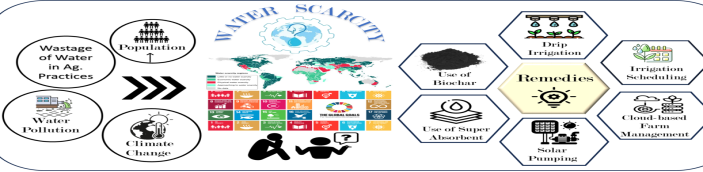
Water is essential for sustaining life and required for carrying out basic daily activities. Even though water covers the vast majority of the earth’s surface, the availability of fresh water, which is necessary to maintain human activities, is limited, making it a scarce resource. Climate change, overexploitation of groundwater, and population growth are all putting significant pressure on natural water sources, which pose a serious threat to various sectors of society, especially in agriculture. Future projections of freshwater availability indicate agriculture production will suffer a significant shock globally, including in India, leading to a threat to food security and sustainability. To ensure the sustainability of this vital resource, it is crucial to use water sensibly. Moreover, it is essential to adopt certain strategies to manage agricultural water use effectively. This includes adopting various water-efficient techniques such as ‘micro-irrigation’, ‘irrigation scheduling’, ‘conservation agriculture’, ‘crop switching’ and so on. In this review, firstly, we discuss water scarcity and its types, causes, crisis for water shortages and hindrance to sustainable development from a global perspective emphasizing the Indian scenario as a developing nation. Secondly, we elaborated our discussion on water scarcity in agriculture including the impacts of water scarcity on agricultural production and its connection to climate change, population growth, and overexploitation of natural resources globally focusing on the Indian scenario. In addition, innovative water management practices and adaptation strategies to manage agricultural water use, constraints, and the need for further research are also covered. It is anticipated that this review will benefit researchers and policymakers by providing useful information on the impacts of water limitation and adoption strategies.
Water is fundamental to life, underpinning all ecological, economic, and social systems on Earth. Yet, in the early 21st century, fresh water has become one of the greatest resources under threat. With growing global populations, accelerating climate change, intensifying agricultural demands, and widening inequalities in infrastructure access, water scarcity is intensifying – posing risks not just to local communities but to global stability. According to the United Nations, by 2025, half the world’s population could be living in areas of water stress or scarcity. This stark forecast raises a central question: can science prevent the next global crisis of water scarcity? To answer this, we must evaluate water scarcity from multifaceted lenses: technological innovation, socio-economic disparities, policy systems, and historical development trajectories.
Water: An important economic resource – Supply and demand
Water can be considered an important economic resource that is heavily utilized by households, industries and agricultural farms for a variety of uses every day, such as drinking purposes, irrigation, generation of hydroelectricity, recreation and amenities. The quantity and quality of the available water have a crucial impact on these goods and services. Water management and distribution include considering its unique qualities as a resource (Turner et al. Reference Turner, Georgiou, Clark, Brouwer and Burke2004). Water is a ‘bulky’ resource as it is abundantly available in nature.
Important Water Scarcity Facts
To understand the severity of water scarcity, here are some powerful facts:
- While 3% of the Earth’s water is fresh, only 0.5% of the Earth’s water is fit and available for consumption. The remaining portion is either inaccessible, in ice caps, glaciers, or underground, or too polluted for people to salvage.
- Water conservation, use and quality affect whether a country is able to meet demands.
- Worldwide, water scarcity now affects one in ten people, estimating around 785 million people.
- If you could put all the world’s water into 26 gallons, the freshwater available for use would equal about half a teaspoon.
- Without access to clean water, people cannot build proper health, sanitation and hygiene procedures, leading to an increased risk of death and disease.
- Access to clean water can help children stay in school. Local access can prevent them from walking miles every day, especially young girls, who typically shoulder the responsibility of water collection.
- About 1.8 billion healthcare employees and patients were at higher risk of having COVID-19 in 2020 because of a lack of clean water or proper sanitation tools in their facilities.
- Diseases that spread in unclean water kill more people than any type of violence, including war.
5 ‘New Water Technologies’ helping to solve a global scarcity crisis
Key Points
- Over 2.3 billion people lack safe drinking water – climate change, urbanisation, and industrialisation are making water security more unstable.
- New water technologies refer to the latest wave of innovations designed to access, purify, and manage water without harming the environment.
- Atmospheric water harvesting extracts moisture from the air, providing off-grid drinking water – even in arid regions.
- Solar-thermal desalination systems use renewable energy to convert seawater into freshwater without harmful chemicals or brine waste.
I. Development Divide
One of the central dimensions of the water scarcity crisis is the development divide — the stark gap between regions that possess the technological, financial, and institutional capacity to manage water resources effectively and those that do not.
Inequities in Access
Across the world, access to safe drinking water and sanitation varies dramatically. Developed countries often have extensive infrastructure for treatment, distribution, wastewater recycling, and stormwater management. In contrast, many developing and least-developed countries struggle with basic water delivery systems. Rural and marginalized populations are disproportionately affected, with some communities walking kilometers to collect unsafe water, while urban centers in wealthier nations pursue cutting-edge water reuse schemes.
This divide not only impacts human well-being but also economic productivity. Water scarcity in agriculture, for instance, can lead to crop failures, food insecurity, and loss of livelihoods. According to the Food and Agriculture Organization (FAO), agriculture accounts for about 70% of global freshwater withdrawals. Yet inefficient irrigation methods and limited access to water-saving technologies amplify vulnerabilities in low-income regions.
Infrastructure Obstacles
Infrastructure plays a central role in determining whether water resources can be reliably accessed and managed. In many parts of Africa and South Asia, water distribution systems are outdated, leaky, or nonexistent. Investment in dams, pipelines, wastewater treatment plants, and groundwater recharge systems is often constrained by limited fiscal resources, governance challenges, and competing priorities.
Scientists and engineers can design advanced systems — from smart sensors that detect leaks instantly to decentralized water treatment units — but without funding and institutional support, such innovations remain out of reach for the populations that need them most.
Knowledge and Capacity Gaps
The development divide also reflects gaps in technical capacity and scientific literacy. In high-income nations, specialists in hydrology, climatology, environmental engineering, and data analytics inform water management decisions. In contrast, many developing regions have limited access to such expertise, making it harder to interpret scientific data, predict risks, or deploy evidence-based solutions.
This gap is not irreducible, but addressing it requires intentional investment in human capital — through education, training, research collaborations, and equitable exchange of knowledge across borders.
II. Opportunities and Challenges
Scientific and technological advances present remarkable opportunities to address water scarcity, but they also confront real-world challenges that limit their deployment and effectiveness.
Scientific Opportunities
1. Desalination and Water Treatment
Advances in reverse osmosis, membrane technologies, and energy recovery systems have made desalination increasingly efficient. Regions with abundant seawater but limited freshwater — such as parts of the Middle East — have scaled desalination to meet urban and industrial demand.
2. Remote Sensing and Data Analytics
Satellite monitoring now allows scientists to measure groundwater depletion, soil moisture, and river flows with unprecedented precision. Coupled with AI and machine learning, this data can help forecast droughts, optimize irrigation, and target interventions before crises escalate.
- Water Recycling and Reuse
Technologies that treat municipal wastewater for agricultural or industrial reuse stretch existing water supplies. Some cities are pioneering direct potable reuse, where treated wastewater is safely integrated back into drinking water systems.
- Precision Agriculture
Sensor-based irrigation systems, crop modeling, and drought-tolerant crop breeding improve water use efficiency in agriculture. Small changes in irrigation timing and method can reduce water use considerably without sacrificing yields.
5.Persistent Challenges
Despite these innovations, several challenges hinder progress:
6.Cost Barriers
Advanced technologies often require steep upfront investments in equipment, energy, and maintenance.
7.Energy Constraints
Many water technologies — especially desalination — are energy intensive. Without clean energy, their deployment can exacerbate climate change.
8.Institutional Fragmentation
Effective water management requires coordination across local, regional, and national authorities. Fragmented governance undermines integrated action.
9.Social Acceptance
Some solutions, such as wastewater reuse, face public resistance due to cultural perceptions or safety concerns.
III. Strategies for Balanced Development
To prevent a global water crisis, strategies must go beyond technological innovation to embrace balanced development — an equitable and sustainable approach that integrates ecological limits, social needs, and economic goals.
Integrated Water Resources Management (IWRM)
IWRM promotes coordinated development and management of water, land, and related resources to maximize social and economic welfare without compromising ecosystem sustainability. Key principles include:
- Stakeholder participation in decision-making
- Cross-sectoral planning (agriculture, urban planning, industry)
- Protection of water ecosystems
- Adaptive management based on scientific monitoring
By viewing water as a shared resource rather than a commodity, IWRM helps balance competing demands — from cities to farms to natural habitats.
Sustainable Agricultural Practices
Agriculture is both a major user and potential wasteful consumer of water. Transformative changes include:
- Drip and precision irrigation to reduce water losses
- Crop diversification and rotation to maintain soil moisture
- Cover cropping and soil conservation to improve water retention
- Breeding drought-resilient crop varieties
When farmers adopt these practices, they not only save water but also build resilience to climate variability.
Urban Water Efficiency
Urban centers can drive demand management through:
- Leak detection and repair programs
- Rainwater harvesting incentives
- Tiered pricing to discourage waste
- Green infrastructure (e.g., bioswales, permeable pavements) to enhance groundwater recharge
Cities that reduce per-capita water use decrease pressure on distant water sources and expand resilience.
Community-Driven Solutions
Local communities are often best placed to understand their water challenges. Participatory approaches include:
- Community wells and local storage systems
- Water user associations for equitable distribution
- Education campaigns to reduce waste
- Support for women and marginalized groups who disproportionately manage household water
Scientific solutions must be co-created with communities to ensure relevance, ownership, and sustainability.
IV. Policy Frameworks and Historical Context
Understanding how policy has historically shaped water use is essential for designing effective frameworks that leverage science without repeating past mistakes.
History of Water Policy
From ancient irrigation systems in Mesopotamia and the Indus Valley to modern megadams, human societies have long sought to control water. Yet policy responses have varied significantly:
- Command-and-control approaches (centrally planned distribution and infrastructure) often prioritized large projects like dams and canals.
- Market-oriented reforms introduced water pricing and tradable water rights to improve efficiency.
- Environmental regulations emerged to protect rivers, wetlands, and groundwater from degradation.
Each approach reflects political and economic priorities of its time. For instance, large dams in the post-World War II era symbolized development and modernization, but they often displaced communities and disrupted ecosystems.
Policy Principles for the Future
Modern water policy must integrate scientific evidence with equity considerations. Key principles include:
- Rights-based access: Ensuring all people have access to safe, sufficient water as a human right.
- Ecosystem protection: Sustaining rivers, aquifers, and wetlands that provide natural filtration and storage.
- Pricing mechanisms: Employing economic incentives to reduce waste while protecting low-income households.
- Data transparency: Open access to water data supports accountability and community engagement.
- Science-policy interfaces: Institutions that translate scientific findings into actionable policies.
Policy frameworks matter because technologies succeed or fail within the legal, institutional, and economic contexts that surround them.
V. Case Studies in Integrated Development
To illustrate how science and policy intersect, it helps to examine specific case studies where integrated approaches have made measurable progress.
Case Study 1: Israel’s Water Innovation
Israel is often cited for overcoming arid conditions to become a global leader in water technology. Strategies include:
- National-level water planning
- Mass adoption of drip irrigation
- Recycling wastewater for agriculture
- Investment in desalination
Today, Israel recycles more than 80% of its wastewater, far above the global average, and supplies a significant portion of agricultural water through treated effluent. These advances arise from long-term policy commitment, robust research institutions, and public-private partnerships.
Case Study 2: Singapore’s “Four National Taps”
Singapore addresses its limited natural water resources through a diversified strategy called the “Four National Taps”:
- Imported water
- Local catchment water
- NEWater (high-grade reclaimed water)
- Desalinated water
By investing in advanced water treatment and emphasizing water conservation, Singapore has built resilience and reduced dependence on imports. Its approach exemplifies how small, resource-limited nations can leverage science to secure water futures.
Case Study 3: Community Groundwater Management in India
In parts of India, community-managed groundwater recharge and watershed development projects have revitalized local water tables. Techniques included:
- Check dams and contour trenches
- Afforestation to reduce evaporation
- Community policing of extraction limits
While success has been uneven across regions, these projects highlight the value of blending scientific knowledge (hydrology, soil science) with local governance and traditional practices.
VI. Recommendations for Policy Prioritization
To avert a global water crisis, policymakers should prioritize actions that harness science while promoting equity and sustainability:
1. Fund Research and Innovation
Increase investment in water science — including low-cost technologies suitable for resource-limited settings, improved forecasting models, and climate-resilient infrastructure.
2. Build Institutional Capacity
Support water governance institutions at local, regional, and national scales, ensuring they can interpret scientific data and implement adaptive management.
3. Promote Data Transparency
Create open platforms for water data, enabling communities, researchers, and businesses to make informed decisions.
4. Reform Water Pricing
Introduce pricing systems that encourage conservation without burdening low-income households. Subsidies can be targeted to basic needs while higher tariffs discourage waste.
5. Prioritize Ecosystem Conservation
Protect natural watersheds, wetlands, and aquifers as vital components of the water system, recognizing their role in filtration, storage, and climate regulation.
Conclusion
Water scarcity is among the defining challenges of the 21st century — not only because fresh water is finite, but because its distribution intersects deeply with systems of governance, equity, economy, and culture. The critical question, can science prevent the next global crisis? can be answered with qualified optimism: yes, but only if scientific innovation is supported by strong institutions, equitable policy frameworks, and inclusive development strategies.
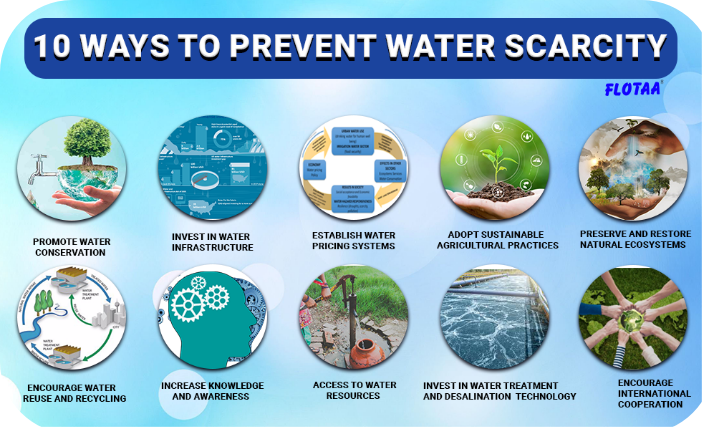
In the coming years, numerous regions around the world, including India, will need greater freshwater resources to fulfill the enormous demands of water and food in the face of the uncertainties of climate fluctuations and other environmental constraints. Various studies have highlighted the common practices of over-exploiting natural resources in India, especially affecting soil health and groundwater table. As 80% of total water consumption goes to the Agricultural sector in India, it has a significant role in averting the aggravation of this critical situation. With almost half of the Indian population being engaged in this sector, a decline in the growth rate by a huge drop in the gross domestic product will be a negative consequence due to water-related losses. In order to address this globally critical issue, the UN has included it as one of the primary objectives of Sustainable Development Goal-6 (SDG 6), which states ‘to ensure availability and sustainable management of water and sanitation for all by 2030’. A total of eight targets come under SDG 6 which takes into consideration – safe and affordable drinking water by 2030 (target 6.1), services for sanitation and hygiene (target 6.2), treatment and reuse of wastewater, improvement of water quality (target 6.3), increasing water use efficiency and freshwater supplies (target 6.4), implementation of integrated water resources management (target 6.5), protection and restoration of water-related ecosystems (target 6.6), international support and capacity building support (target 6A) and lastly, support and strengthen the participation of communities in water and sanitation management (target 6B) (https://sdgs.un.org/goals). To achieve this target, specific adaptation strategies for water management should be followed that have been discussed thoroughly in this study including evaluating water pricing and markets, adaptability of various water-use efficient techniques and their costs and benefits across different regions, improved irrigation systems, such as micro-irrigation, fertigation, deficit irrigation and so on, modern water-saving agricultural practices like conservation tillage, crop shifting, crop rotation, mulching, use of drought tolerant crops. Additionally, innovative technologies for water management approaches like the use of super-absorbent polymer hydrogels, biochar and precision agricultural practices are also discussed to provide a thorough understanding.
Science provides powerful tools such as predictive climate and hydrological models, efficient water-use technologies, satellite-based monitoring, and advanced water treatment systems.
Ultimately, preventing a global water crisis demands a collective and coordinated commitment — from policymakers who craft just and forward-looking frameworks, from scientists who innovate responsibly, and from communities who actively steward their water resources. If this shared commitment is realized, water scarcity need not become an inevitable catastrophe, but rather an opportunity to advance sustainable, resilient, and equitable development worldwide.